
Thoughts on the Thessalonians (Part 1)

There are many good ways to study the Bible. I’m a big fan of the inductive Bible study method. Kay Arthur has been teaching this approach for decades. I’ve read her book How to Study Your Bible several times. We would all do well to master the principles presented here.


A more recent advocate for the inductive method is Heather Erdmann. In 2022 she released A Week in the Word, and I immediately wanted to utilize the steps presented in this book. So I did a study of the seven “I AM” statements of Jesus (from John’s gospel) using her format, and benefitted greatly as my knowledge of and love for Jesus increased significantly.

NOTE: I’ve been working on a book version of this “I AM” study, co-authored with Heather, hopefully to be released soon. Stay tuned!

Another method that I use is Erik Raymond’s CRAM approach, in which four specific questions are asked of the text.

Regardless of which method we use the study the Word, what should be the result? 2 Timothy 3:16-17 tells us:

All Scripture is God-breathed and is useful for teaching, rebuking, correcting and training in righteousness, so that the servant of God may be thoroughly equipped for every good work.”

God wants to do at least five things for us whenever we study his Word: teach us, rebuke us, correct us, train us in righteousness, and equip us for good works. What good Father would not do that for his children?

God is in the business of sanctifying us through his Word, changing us to become more like Jesus every day. If that is not happening, then we are missing the point of Bible study.

Now I’d like to show you how I use the CRAM method.

I’ve been reading through the New Testament each year, usually a chapter a day, five days a week. But I rarely just read it. I typically have a notebook and pen in hand, and while reading I interact with the text by asking questions of the passage, such as the questions from the CRAM method. Here are the four questions, along with some of my responses from my journal on November 14, 2022, when I meditated on 1 Thessalonians 1.

See how my Father, through this opening section of Paul’s letter to a young yet thriving church, teaches me, rebukes me, corrects me, trains me, and equips me to do his will.

1.“C” is for the Character of God:
What does this passage teach about who God is?

v.1. God is “the Father.” He is “our God and Father” (v.3), which means he is my Father.
v.1. Jesus is “the Lord Jesus Christ.” He is Lord, the sovereign ruler of the universe. And he is the Christ, the Messiah, the Anointed One, anointed by God to come to earth and accomplish our salvation and bring us to God.
v.10. One day the Son of God will come from heaven to rescue God’s people from “the coming wrath” – the wrath of Jesus and his Father. Only Jesus can do that.

2. “R” is for Responsibility:
What does God require of his people in this text?

This is the focus of the passage. Paul tells the Thessalonian church that he prays for them and continually thanks God for them because of their work of faith, their labor of love, and their steadfastness of hope in Christ. Then he continues to commend them for their many demonstrations of genuine faith.

We have here two great examples of what it means to live a life pleasing to God.

Example #1: Paul’s prayers for the Thessalonians. Note these characteristics of godly prayer:
— thanksgiving to God for the people of God (v.2)
— praise to God for the faith, love, and hope of God’s people (v.3)
— this thanksgiving and praise was an ongoing practice; he did this “continually” (v.2)

The example of Paul’s prayer life is also the responsibility of all believers. This is how all Christians should pray for one another.

Example #2: characteristics of the Thessalonians. Here is a description of what it means for a church to be filled with genuine believers. They were characterized by:
— faith, love, and hope (v.3)
— Christ-likeness; they were imitators of Paul and Jesus (v.6)
— joyful reception of the Word (v. 6)
— perseverance: they were persecuted for their new faith, yet did not jump ship in the midst of severe suffering (v. 6)
— true conversion experience: they turned to God from idols; they had a radical change of life, doing a 180, leaving their lives of paganism and embracing Jesus as Savior and Lord (v.9)
— patience: they were waiting for Jesus to come back from heaven to rescue them from God’s wrath (v.10)

The example of the Thessalonians is also the responsibility of all believers. This is how all Christians should live.

3. “A” is for Attitudes and Actions:
What does this passage reveal about my attitude and actions?

Example #1. How is my prayer life for other believers? Lately, I have been praying less for other Christians than I used to. Not good! There are many believers that I pray for regularly – my wife; people in our Bible studies; leaders at our local church (staff, elders, worship leaders, etc); missionaries. Recently, my wife is the only one that I have been praying for consistently. This is a sin of omission for which I need to repent.

Example #2. How am I doing in each of the areas listed above, the characteristics of which the Thessalonians were model believers? Taking a spiritual inventory is hard. There is always room for improvement in every area. My biggest weakness tends to be my love for people. Lately, that seems to be improving. My hope in Christ is also strong. Having faith in God’s sovereignty is a challenge right now. I am distraught over the lost condition of many family members. I keep praying for them, yet there is no change. Rather, they all appear to be moving even further away from God.

4. “M” is for Meditation:
How does this passage teach me to trust and treasure Christ more?

The Thessalonians were imitators of Christ (v. 6). That is my prayer today: “Jesus, make me more like you. Give me love for the believers in my life; renew my desire to pray for them. And please give me your love for the people in my family who don’t know you. You are not on their radar screen at all, which is how I lived for many years. Give me patience and kindness toward them, no matter how they treat you. Please grant me your compassion for them, for you are the perfect example of how I should love them.”

 

Posted in Bible reading, Thoughts on the Thessalonians | Tagged , , , , | Leave a comment

Jesus: The Ultimate Realist

Jesus was the ultimate realist.

He told His followers exactly what to do with His Word: share it. Give it away without cost, because “You received without paying; give without pay” (Matthew 10:8).

And He also told the disciples exactly what types of responses to expect from people. Some would receive the Word with repentance and faith because Jesus promised that “I will build my church, and the gates of hell shall not prevail against it” (Matthew 16:18).

But many will also reject the Word and those who share it because the gospel, as Paul wrote, “is folly to those who are perishing” (1 Corinthians 1:18).

Jesus repeatedly told the disciples to expect ridicule, hatred, persecution, and even martyrdom. I believe it is wise for us to reflect on this often, so we will not be surprised when it happens.

The extent of this opposition varies greatly, from the not-so-subtle rolling of the eyes when a co-worker discovers that you are a Christian, to the physical violence that believers experience every day throughout the world, especially in Muslim countries, from both government and family.

Consider these words spoken by Jesus:

“You will be hated by all for my name’s sake.” (Matthew 10:22)

“Do not think that I have come to bring peace to the earth. I have not come to bring peace, but a sword.  For I have come to set a man against his father, and a daughter against her mother, and a daughter-in-law against her mother-in-law. And a person’s enemies will be those of his own household.” (Matthew 10:34-36)

My personal experience with persecution has been limited. When I became a Christian, my family did not ostracize or disown me. In fact, they supported me. The only time I can remember being verbally abused by a non-Christian was during my 35-year career as a tax accountant. When one of my clients found out I was a Christian, he loved to make fun of me and call me an idiot for believing the Bible. We had many conversations about Christianity, and he did most of the talking. We would meet to do his tax return and end up spending most of the time discussing his objections to the faith. Nothing I said made a dent in his worldview.

What are we to do when faced with such a negative response to the gospel?

Again I turn to what Jesus said:

“A disciple is not above his teacher, nor a servant above his master. It is enough for the disciple to be like his teacher, and the servant like his master. If they have called the master of the house Beelzebul (a synonym for Satan), how much more will they malign those of his household.” (Matthew 10:24-25)

During His earthy ministry, some people responded to Jesus with love and devotion. But most people rejected Jesus. And so they will reject us, too. Expect it. Do not be alarmed by it. And persevere in spite of it.

Jesus was the most loving person who ever lived. He loved like no one ever loved. Those who accepted Him and His message were welcomed with open arms into His kingdom and His family. And those first disciples, along with throngs of others who have submitted to His reign over the centuries, will live in His glorious presence forever.

Yet because Jesus spoke the truth of God, He was ridiculed, laughed at, mocked, and killed.

Why should we expect to be treated any differently? “Indeed, all who desire to live a godly life in Christ Jesus will be persecuted” (2 Timothy 3:12).

For my favorite resources on sharing the Bible, please visit . . .
https://GodWroteTheBook.com/resources-how-to-share-the-bible/

Posted in Evangelism, Jesus Christ | Tagged , , | Leave a comment

Resources on How to Share the Bible

Here are some of my favorite resources on how to share the Bible:

How to Take A Stand for the Bible
https://godwrotethebook.com/how-to-take-a-stand-for-the-bible/

Christianity Explored: What’s the Best News You’ve Ever Heard?
https://godwrotethebook.com/christianity-explored/

How to Share the Bible with Others
https://godwrotethebook.com/how-to-share-the-bible-with-others/

How to Share the Bible at Your Kitchen Table
https://godwrotethebook.com/how-to-share-the-bible-at-your-kitchen-table/

You would do well to come back to this webpage from time to time because I will continue to add more resources in the days to come.


Posted in Evangelism | Tagged , , | Leave a comment

How to Handle Difficult Bible Verses

Overall, do you find the Bible hard or easy to understand?

Or both perhaps?

Do you ever read a verse or a passage or even a whole book and think, “What does that mean?”

If so, this post is for you.


Here are some thoughts on the topic of “difficult Bible verses.”

1. You are not alone.
When it comes to dealing with “hard to understand” passages, here’s one that should help us all.

15 Bear in mind that our Lord’s patience means salvation, just as our dear brother Paul also wrote you with the wisdom that God gave him. 16 He writes the same way in all his letters, speaking in them of these matters. His letters contain some things that are hard to understand, which ignorant and unstable people distort, as they do the other Scriptures, to their own destruction.
2 Peter 3:15-16

The Apostle Peter wrote that Paul’s letters contain “hard to understand” passages.

Did I mention that an Apostle wrote that?

I find much comfort in knowing that Peter found “some things” in Paul’s writings that were not easy to comprehend. Don’t you?

So, whenever you read a verse and its meaning escapes you, relax. It’s OK. It’s to be expected. Peter didn’t always understand what Paul wrote, and neither will you and me.

2. Ultimately, God wrote the Bible; therefore, even mature Christians with much Bible knowledge will wrestle with passages from time to time.

In his excellent book, How to Succeed in the Christian Life, Reuben Torrey writes that “Sooner or later every young Christian comes across passages in the Bible which are hard to understand and difficult to believe.”

I would add that if you removed the word “young” from the sentence above, you would be correct.

And I believe Dr. Torrey would agree. He goes on to explain why this is so.

“What is the Bible? It is a revelation of the mind and will and character and being of the infinitely great, perfectly wise, and absolutely holy God. But to whom is this revelation made? To men and women like you and me, to finite beings. To men who are imperfect in intellectual development and consequently in knowledge, and in character and consequently in spiritual discernment.

“There must, from the very necessities of the case, be difficulties in such a revelation made to such persons. When the finite tries to understand the infinite there is bound to be difficulty . . . When sinful beings listen to the demands of an absolutely holy God, they are bound to be staggered at some of His demands; and when they consider His dealings, they are bound to be staggered at some of His dealings.

“There must be, in any complete revelation of God’s mind and will and character and being, things hard for a beginner to understand, and the wisest and best of us are but beginners.”

More thoughts from Dr. Torrey (see below for a link to get a free copy of his book) . . .

3. “Difficulties in the Bible . . . rapidly disappear upon careful and prayerful study.”

“How many things there are in the Bible that once puzzled us and staggered us that have been perfectly cleared up, and no longer present any difficulty at all! Is it not reasonable to suppose that the difficulties that still remain will also disappear upon further study?”

That has been my experience. And I still have many passages that I do not understand. But the more I study the Bible, the more I have seen the truth of the previous paragraph. How about you?

4. How do you go about studying those difficult passages? Dr. Torrey recommends the following seven attitudes and practices:

With honesty. “Whenever you find a difficulty in the Bible, frankly acknowledge it. If you cannot give a good, honest explanation, do not attempt as yet to give any at all.”

With humility. “Recognize the limitations of your own mind and knowledge, and do not imagine there is no solution just because you have found none.”

With determination. “Make up your mind that you will find the solution if you can by any amount of study and hard thinking.”

With fearlessness. “Do not be frightened when you find a difficulty, no matter how unanswerable it appears upon first glance. Thousands have found such before you. They were seen hundreds of years ago and still the Old Book stands.”

With patience. “Do not be discouraged because you do not solve every problem in a day.”

With Scripture. “If you find a difficulty in one part of the Bible, look for other Scriptures to throw light upon it and dissolve it. Nothing explains Scripture like Scripture.”

With prayer.  “It is wonderful how difficulties dissolve when one looks at them on his knees.”

Great advice from a wise man. To get a free copy of How to Succeed in the Christian Life in Kindle format, click here.

For more on this topic, check out these resources:

Encountering Difficult Passages
https://tabletalkmagazine.com/article/2018/11/encountering-difficult-passages/

6 Wrong Ways to Approach Difficult Bible Passages
https://www.thegospelcoalition.org/article/approach-difficult-bible-passages/

Posted in Bible reading, Book Reviews | Tagged , , , | Leave a comment

4 Great Reasons to Celebrate the Resurrection

As we celebrate the resurrection of Jesus, I am thankful for four great reasons to be excited about what happened one Sunday morning 2,000 years ago.

Because Jesus was raised from the dead, we receive compassion, power, glory, and hope from the God of all comfort.


1. The Resurrection of Jesus Displays the Compassion of God
Our lives are filled with pain, sorrow, and suffering. We are “born to trouble as surely as sparks fly upward” (Job 5:8). And we don’t have to go far to see the evidence of that – look how vulnerable we are to sickness and death; microscopic organisms wreak havoc on us daily. No matter how strong we think we are, we are truly frail human beings. Our lives hang by the thread of God’s sovereign grace. “What is your life? You are a mist that appears for a little while and then vanishes” (James 4:14).

Paul laments the plight of living in a mortal body while proclaiming the promise of a resurrected body: 22  We know that the whole creation has been groaning as in the pains of childbirth right up to the present time. 23 Not only so, but we ourselves, who have the firstfruits of the Spirit, groan inwardly as we wait eagerly for our adoption to sonship, the redemption of our bodies24 For in this hope we were saved.” (Romans 8:22-24)

God is the Redeemer of both soul and body from the corruption caused by sin. This is the good news of the Gospel! This is the love, mercy, and grace of God on display.

2. The Resurrection of Jesus Unleashes the Life-Giving Power of Jesus
Just as Jesus raised Lazarus from the grave, so will He raise us from the dead. “I am the resurrection and the life. The one who believes in me will live, even though they die; and whoever lives by believing in me will never die” (John 11:25-26).

Jesus foretold the bodily resurrection of all people, some to eternal life and some to eternal condemnation:

24 “Very truly I tell you, whoever hears my word and believes him who sent me has eternal life and will not be judged but has crossed over from death to life. 25 Very truly I tell you, a time is coming and has now come when the dead will hear the voice of the Son of God and those who hear will live. 26 For as the Father has life in himself, so he has granted the Son also to have life in himself. 27 And he has given him authority to judge because he is the Son of Man.

28 “Do not be amazed at this, for a time is coming when all who are in their graves will hear his voice 29 and come out—those who have done what is good will rise to live, and those who have done what is evil will rise to be condemned.” (John 5:24-29)

3. The Resurrection of Jesus Anticipates the Future Glory of God’s People
What will it be like to “hear the voice of the Son of God . . . and live”? (John 5:25). It means that we will become like Jesus, with a resurrected body like His.

“For those God foreknew he also predestined to be conformed to the image of his Son, that he might be the firstborn among many brothers and sisters. And those he predestined, he also called; those he called, he also justified; those he justified, he also glorified.” (Romans 8:29-30)

We will receive “a spiritual body” that replaces our decaying “natural body” (1 Corinthians 15:44).  We will be like Jesus and never sin again, nor will we suffer the physical or spiritual effects of sin. “He will wipe every tear from their eyes. There will be no more death or mourning or crying or pain, for the old order of things has passed away.” (Revelation 21:4)

4. The Resurrection of Jesus Guarantees the Eternal Hope of God’s People
My friend, this is what eternity has in store for us. For the believer, the best is yet to come. Therefore, we have hope, and this hope motivates us and sustains us to persevere to the end.

51 Listen, I tell you a mystery: We will not all sleep, but we will all be changed— 52 in a flash, in the twinkling of an eye, at the last trumpet. For the trumpet will sound, the dead will be raised imperishable, and we will be changed. 53 For the perishable must clothe itself with the imperishable, and the mortal with immortality. 54 When the perishable has been clothed with the imperishable, and the mortal with immortality, then the saying that is written will come true: “Death has been swallowed up in victory . . . 58 Therefore, my dear brothers and sisters, stand firm. Let nothing move you. Always give yourselves fully to the work of the Lord, because you know that your labor in the Lord is not in vain.” (1 Corinthians 15:51-54, 58)

I trust you find these truths a source of much encouragement and joy today. If so, let me know by leaving a comment below.

Posted in Jesus Christ, Salvation | Tagged , | Leave a comment

What the Bible Says about Jesus’ Last Week


As we prepare our hearts to remember and celebrate the last week of Christ’s life on earth, I am compelled to share something that has always amazed me.

The first four books of the New Testament, “the Gospels,” contain 89 chapters.

Matthew – 28 chapters
Mark – 16 chapters
Luke – 24 chapters
John – 21 chapters

And of those 89 chapters, 30 chapters cover the events of the last week of Jesus’ life.

In other words, about 33% of the Gospels are all about the last few days of Christ’s life, culminating with his crucifixion on Good Friday and his resurrection on Easter Sunday. (Also included in these 30 chapters are his post-resurrection appearances.)

I find that most significant. Think about it. We emphasize what is most important. We repeat ourselves when we want to make sure that people understand what we’re saying, that they “get it.”

In the books of Matthew, Mark, Luke, and John, God has done exactly that. By devoting such a large portion of these inspired narratives to the details of Christ’s death and resurrection, and the events immediately preceding and following, he is making a point: the most critical events in the life of Jesus, and therefore the most important events in the history of the world, are found in the final 30 chapters of the four Gospels.

With that in mind, I wanted to share with you a simple way to better understand and internalize the significance of Christ’s final week: during the next 6 or 7 days, why not read these accounts for yourself?

Here are the chapters:

Matthew 21-28
Mark 11-16
Luke 19-24
John 12-21

For example, pick one of the Gospels and read 1 or 2 chapters each day during the week that ends on Easter Sunday. You can do this on your own, or if you have a family, start a new family tradition and do it together.

Here’s how this would play out for each of the Gospels. The chapter number(s) are listed next to each day of the week.

Matthew
Monday – 21,22
Tuesday – 23
Wed – 24
Thur – 25
Fri – 26
Sat – 27
Sun – 28

Mark
Tuesday – 11
Wed – 12
Thur – 13
Fri – 14
Sat – 15
Sun – 16

Luke
Tuesday – 19
Wed – 20
Thur – 21
Fri – 22
Sat – 23
Sun – 24

John
Monday – 12, 13
Tuesday – 14, 15
Wed – 16, 17
Thur – 18
Fri – 19
Sat – 20
Sun – 21

Next year, pick a different Gospel, and continue to alternate Gospels so that every four years you cover the final chapters in all the Gospels.

Doing this every year will give you a much greater appreciation for what Jesus did for you by dying, rising from the grave, and spending time with his followers after the resurrection.

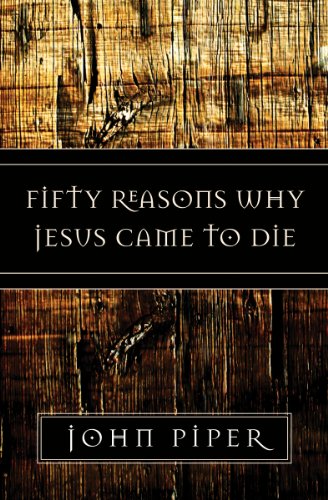
Here’s one more idea to increase your understanding of both the significance and the meaning of Christ’s death. Get a free copy of John Piper’s Fifty Reasons Why Jesus Came to Die. Each chapter is a short yet meaty 2-page explanation of selected verses that teach a specific reason for the God-glorifying, salvation-providing death of Jesus. Read a chapter a day and you’ll fill your mind with wonderful truths found throughout the New Testament.

I wish you a week of much joy and gratitude as you read and meditate on the soul-satisfying message of Good Friday and Easter Sunday.

Posted in Bible reading, Jesus Christ, Salvation, What the Bible Says | Tagged , , , | Leave a comment

50 Reasons Why Jesus Died

If you have a passion to learn about God so you can love Him and serve Him all the days of your life, there is an abundance of resources available online, all at no cost.

This is one of the benefits of being alive in this age of technology. God has not only given us His Word, but He has also provided gifted teachers who have written books that explain the meaning of His Word.

One such book is John Piper’s Fifty Reasons Why Jesus Came to Die. Click here to get your free copy in Epub, Mobi (Kindle) or PDF format.

I love this book and read it repeatedly, usually at this time of year, as Good Friday and Easter Sunday draw near.

Jesus came to die. He made that clear: “For even the Son of Man came not to be served but to serve, and to give his life as a ransom for many” (Mark 10:45).

And why did Jesus come to die? For at least 50 reasons. And Reason #1 is explained succinctly, thoroughly, and biblically in Chapter 1 of Piper’s book:
“To Absorb the Wrath of God.”

The fury and anger of God is not a popular topic these days. Never has been. Never will be. Yet when you read the whole Bible, you find it repeatedly. And not just in the Old Testament. John the Baptizer was a judgment preacher. So were the Apostles. And so was Jesus.

Jesus spoke much about God’s grace, mercy, and kindness. “For he makes his sun rise on the evil and on the good, and sends rain on the just and on the unjust” (Matthew 5:45). And He also said much about His wrath and judgment. “And do not fear those who kill the body but cannot kill the soul. Rather fear him who can destroy both soul and body in hell” (Matthew 10:28).

I recently read the book of Hebrews. What a great letter! We don’t know who wrote Hebrews. Whoever did had a balanced view of God. There is so much truth in this book about God – who He is, what He has done through Jesus, and what He will do for His people who persevere in the faith and resist the temptation to jump ship.

I’ve also been listening to John Piper’s sermons on Hebrews (there are 52 of them, all available for free at desiringGod.org). I especially like the sermon on Hebrews 10:26-31 entitled, “Woe to Those Who Trample the Son of God.”

Here’s the text:

26 For if we go on sinning willfully after receiving the knowledge of the truth, there no longer remains a sacrifice for sins, 27 but a certain terrifying expectation of judgment, and the fury of a fire which will consume the adversaries. 28 Anyone who has set aside the Law of Moses dies without mercy on the testimony of two or three witnesses. 29 How much severer punishment do you think he will deserve who has trampled under foot the Son of God, and has regarded as unclean the blood of the covenant by which he was sanctified, and has insulted the Spirit of grace? 30 For we know Him who said, “Vengeance is mine, I will repay.” And again, “The Lord will judge his people.” 31 It is a terrifying thing to fall into the hands of the living God.

And here are some of Piper’s comments on this text:

“Whatever your view of God, the Creator of the universe and the Father of our Lord Jesus Christ, if it does not include this (God’s judgment), it is a distorted, unrealistic view. God is a God of vengeance, and to fall into his hands is a terrifying thing.

“It is honest and loving and wise to tell people the truth about the wrath of God.

“Now this is a portrait of God . . . that our strange age does not want to hear, and does not believe is helpful or true. For most people today, God, if he is there at all, is there to thank after a close call and to question after a tragedy.

“So we need to hear this text and do a reality check on our view of God. Terrifying expectation of judgment . . . fury of fire . . . consume the adversaries . . . rendering punishment worse than death . . . repaying vengeance . . . with terrifying hands. That too is the truth about God.”

My favorite comment above is this: “It is honest and loving and wise to tell people the truth about the wrath of God.” Oh, that more pastors and evangelists would understand that sentence.

And if it is honest and loving and wise to tell people about God’s wrath, it must also be true that it is honest and loving and wise for us to study God’s wrath.

Here’s one surefire way to increase your gratitude for and enjoyment of God’s love: please join me in spending more time studying His wrath. As we will soon see, the Bible teaches that there is an inseparable relationship between the two. The better we understand His wrath, the more we will understand His love.

Do you want to live a life of greater praise and worship of God for His priceless gift of salvation? Then spend much time learning what God has saved us from – and at the top of that list is His wrath.

Here’s a wonderful verse to get you started:
“In this is love, not that we have loved God but that he loved us and sent his Son to be the propitiation for our sins” (1 John 4:10).

Jesus died to be “the propitiation for our sins.” What does the word “propitiation” mean? “It refers to the removal of God’s wrath by providing a substitute. The substitute is provided by God himself. The substitute, Jesus Christ, does not just cancel the wrath; he absorbs it and diverts it from us to himself. God’s wrath is just, and it was spent, not withdrawn.” (Fifty Reasons Why Jesus Came to Die, page 21).

Wow! That is amazing. That is incredible. The wrath of God hangs over our heads like a storm ready to be unleashed. Because of our sin, we deserve that wrath, because “God’s wrath is just.” When Jesus died, God’s wrath was “spent, not withdrawn.” It was removed from us. But it didn’t just disappear into the sunset. It was diverted from us and poured out on Jesus.

God must punish all sin. His holiness, justice, and righteousness demand that. (And all sin will be punished, either in the lake of fire or on the cross.) God cannot just look the other way. When Jesus died, He absorbed the full force of God’s wrath “in his body on the tree” (1 Peter 2:24).

That’s the meaning of “propitiation.” And that is how God both loved us and satisfied His justice.

“Let us not trifle with God or trivialize his love. We will never stand in awe of being loved by God until we reckon with the seriousness of our sin and the justice of his wrath against us. But when, by grace, we waken to our unworthiness, then we may look at the suffering and death of Christ and say, “In this is love, not that we have loved God but that he loved us and sent his Son to be the [wrath-absorbing] propitiation for our sins.” (Fifty Reasons Why Jesus Came to Die, page 21).

I trust you’ll find these comments helpful as you prepare your heart to celebrate the goodness of God on Good Friday and Easter Sunday.

Why not spend the next two weeks preparing for Good Friday and Easter Sunday by reading John Piper’s book? Each chapter is a short yet meaty 2-page explanation of selected verses that teach a specific reason for the God-glorifying, salvation-providing death of Jesus.

Also, to listen to (and/or read) John Piper’s sermon quoted above, visit:
https://www.desiringgod.org/messages/woe-to-those-who-trample-the-son-of-god

To listen to (and/or read) the rest of Piper’s 52 sermons on Hebrews, visit:
https://www.desiringgod.org/series/hebrews/messages


Posted in Book Reviews, Knowing God, Salvation | Tagged | Leave a comment

How to Take A Stand for the Bible

Back in January, I added a new word to the Mission Statement of this website: its purpose is to help you read, study, understand, believe, obey and share the Bible. Each of us is like one beggar telling another beggar where to find food. “Freely you have received, freely give” (Matthew 10:8).

Resources abound to enable us to do that, such as:

Ray Comfort and LivingWaters.com
https://godwrotethebook.com/how-to-share-the-bible-with-others/

Rico Tice and ChristianityExplored.org
https://godwrotethebook.com/christianity-explored/

Now I’d like to tell you about a third ministry that can equip you to engage people in discussions about God’s truth:

Greg Koukl and the Ministry of Stand to Reason (str.org)
Here you’ll find a boatload of quality evangelistic resources: articles, videos, podcasts, and other training materials on a wide range of relevant topics. Do yourself a big favor and spend time on this website. There is so much good info here (much of it free), it’s hard to know where to start.

Here are two of my favorite places on this website:

Tactics and Tools
https://www.str.org/tactics-and-tools
Some of the content you’ll find here includes:
** How Can I Get into Spiritual Conversations with People?
** Four Tips for Having Good Conversations
** A Simple Survey to Help Initiate Spiritual Conversations
** How to Respond to Questions That Aren’t Really Questions
** Advice for Apologists
** Is Debating Atheists in Chat Rooms a Worthy Endeavor
** What Should I Read to Take My Apologetics Knowledge up a Notch?

A Free Course: “Tactics”
https://training.str.org/
Tired of finding yourself flat-footed and intimidated in discussions about your values and convictions? Want to increase your confidence and skill in conversation, no matter who you’re talking to? If so, “Tactics” can be a game-changer for you. This simple, 3-step game plan will get you comfortably in the driver’s seat in your dialogues with others while providing a tremendous amount of safety for you in the process. Many have said, “Tactics changed my life.” This material can change your life, too.

To enroll in this free course, go to str.org and click on “Training.” Then click on “STR U.” Then go to the bottom of the screen and click on “Get Started” to create a free account or log in with Facebook or Google. Then enroll in the course, “Tactics.”

The content of this course is also found in Greg Koukl’s book Tactics: A Game Plan for Discussing Your Christian Convictions, available in Kindle and paperback on Amazon.
https://www.amazon.com/Tactics-10th-Anniversary-Discussing-Convictions/dp/0310101468

Other free courses at STR U include:
** Are the Gospels Reliable History?
** God the Son: Answering Nine Challenges to Jesus’ Deity
** Who Is Jesus?
** Risen: The Case for the Resurrection
** Homosexuality and the Bible
** Making Abortion Unthinkable

I trust you’ll find these resources beneficial. If so, let me know by leaving a comment below.

Posted in Evangelism, Salvation | Tagged , , | Leave a comment

The New Testament in One Sentence

Here’s a quick question for you to ponder:
What is the main point of the entire New Testament?

If you could recap all 27 books in one sentence, what would it be?

Here’s how J.I. Packer does it:

“You sum up the whole of New Testament teaching in a single phrase, if you speak of it as a revelation of the Fatherhood of the holy Creator.”


He continues:

“In the same way, you sum up the whole of New Testament religion if you describe it as the knowledge of God as one’s holy Father. If you want to judge how well a person understands Christianity, find out how much he makes of the thought of being God’s child, and having God as his Father. If this is not the thought that prompts and controls his worship and prayers and his whole outlook on life, it means that he does not understand Christianity very well at all. For everything that Christ taught, everything that makes the New Testament new, and better than the Old, everything that is distinctively Christian as opposed to merely Jewish, is summed up in the knowledge of the Fatherhood of God. ‘Father’ is the Christian name for God . . . Our understanding of Christianity cannot be better than our grasp of adoption.”

The above quotes are from Packer’s book, Knowing God. Chapter 19, entitled “Sons of God,” is devoted to a wonderfully thorough explanation of the meaning of the Father’s adoption of the believer into the family of God through the work of God the Son and God the Holy Spirit.

Yes, the New Testament is filled with verses that tell us what it means to be a child of God. Here are a few of my favorites. Let the truth of these words take your breath away!

“See what kind of love the Father has given to us, that we should be called children of God; and so we are . . .  Beloved, we are God’s children now” (1 John 3:1-2).

“In Christ Jesus you are all sons of God, through faith” (Galatians 3:26).

“But to all who did receive him, who believed in his name, he gave the right to become children of God,  who were born, not of blood nor of the will of the flesh nor of the will of man, but of God” (John 1:12-13).

“But when the fullness of time had come, God sent forth his Son, born of woman, born under the law, to redeem those who were under the law, so that we might receive adoption as sons” (Galatians 4:4-5).

Back to Packer:

“To those who are Christ’s, the holy God is a loving Father; they belong to His family; they may approach Him without fear, and always be sure of His fatherly concern and care. This is the heart of the New Testament message.”

These quotes are but the tip of the iceberg. I highly recommend the rest of Chapter 19 to you. Knowing God is available on Amazon in Kindle and paperback here:
https://www.amazon.com/Knowing-God-IVP-Signature-Collection-ebook/dp/B08TH65W3C/

For several excellent free articles by and about J.I. Packer, visit
https://www.crossway.org/articles/what-knowing-god-involves/

The above link on Crossway.org will give you access to these articles:
What Knowing God Involves
J.I. Packer on the Hub of the Christian Life
10 Things You Should Know about J.I. Packer
Podcast: The Life and Legacy of J.I. Packer

Posted in Famous Christians, Knowing God, Thoughts About God | Tagged , , , | Leave a comment

What the Bible Says about How to Please God

Have you ever noticed how one question leads to another?

For example, how do you answer the question, “Why are we here?” Or, “What is the purpose of your life?”

Do you ever think about these questions?

We should, because the Bible tells us clearly what the purpose of life should be.


Here’s how the Apostle Paul answered the above questions.

Yes, we are of good courage, and we would rather be away from the body and at home with the Lord. So whether we are at home or away, we make it our aim to please him. 10 For we must all appear before the judgment seat of Christ, so that each one may receive what is due for what he has done in the body, whether good or evil.
2 Corinthians 5:8-10 ESV

The aim or goal (NIV) of the Christian life is to please the Lord.

Knowing that, we must then address the question, “What does it mean to ‘please’ Jesus?” How do we do that?

God has an answer to that question, too.

By faith Enoch was taken up so that he should not see death, and he was not found, because God had taken him. Now before he was taken he was commended as having pleased God. And without faith it is impossible to please him, for whoever would draw near to God must believe that he exists and that he rewards those who seek him.
Hebrews 11:5-6 ESV

Enoch made it to the Hall of Faith because he pleased God. And how do we please God? Through faith, because “without faith it is impossible to please him” (v. 6).

This leads to yet another question: “What is faith?”

God is ready to answer that question, too.

God’s Definition of Faith

Fortunately, God has not left us without a clear explanation of the meaning of belief. Hebrews 11:1 provides what is arguably the best teaching on the meaning of faith in the Bible:

“Now faith is being sure of what we hope for and certain about what we do not see.” (NIV 1978)

“Now faith is confidence in what we hope for and assurance about what we do not see.” (NIV 2011)

“Now faith is the assurance of things hoped for, the conviction of things not seen.” (ESV)

By looking at these three translations of Hebrews 11:1, we can enhance our understanding of faith, for here we find for several synonyms for faith: sureness, certainty, confidence, assurance, and conviction.

Words used in conjunction with “believe” (the verb form of “faith”). Throughout his Gospel, the Apostle John uses several words in close proximity to “believe.” These, too, can be added to our list of synonyms for faith.

“But to all who did receive him, who believed in his name, he gave the right to become children of God” (1:12).

“Then Jesus declared, ‘I am the bread of life. Whoever comes to me will never go hungry, and whoever believes in me will never be thirsty’” (6:35).

“My Father’s will is that everyone who looks to the Son and believes in him shall have eternal life” (6:40).

“We have come to believe and to know that you are the Holy One of God” (6:69).

“Then the man said, ‘Lord, I believe,’ and he worshiped him” (9:38).

“But if I do them, even though you do not believe me, believe the works, that you may know and understand that the Father is in me, and I in the Father” (10:38).

These verses show us that to believe in Jesus, or have faith in Jesus, means to receive Him, come to Him, look to Him, worship Him, know Him, and understand Him.

Faith in what? These verses also make it clear that Jesus must be the object of our faith, for in John’s Gospel the issue is whether or not we believe in Jesus. The benefits of faith are only given to those who are certain about Him. This is one of John’s main points: “Whoever believes in the Son has eternal life, but whoever rejects the Son will not see life, for God’s wrath remains on him” (John 3:36).

Biblical faith must have the right object. This is why we find the Apostle using the same words repeatedly to communicate that Jesus must be the One in whom we believe. The phrases “believe in Him” (3:16) or “believe in me” (5:46) appear at least 27 times in John. Other phrases along this line include “believe in the Son” (3:36), “believe in his name” (2:23), “believe in the name of the only Son of God” (3:18), “believe in the Son of Man” (9:35), and “believe in the light” (12:36). Faith in anyone else or anything else is not biblical faith.

Biblical faith is to come to a Person, namely Jesus of Nazareth, with the confident conviction that He is everything the Bible says He is. For starters, as taught in John 4, believing in Jesus means we are sure that He is the Savior of the world (4:42), the Christ/Messiah/King of the world (4:26), and the Life (Living Water) of the world (4:14).

In other words, the “what” of biblical faith is the certain assurance of who Jesus is. John’s gospel is packed with statements about the identity of Jesus. He is not only Savior, King, and Living Water, He is God Himself. Believing in Jesus is to accept the truth that He is God, the Creator of the universe (1:1-3). To believe in Jesus is to believe in Him as God’s “one and only Son” (3:16), and to believe in Jesus as the Son of God is to believe in Him as God the Son, an unmistakable reference to His deity and the main reason why Jesus so infuriated the Jewish religious leaders. This was the legal charge against Him that ultimately led to His crucifixion. It is why the Jews told Pilate, “We have a law, and according to that law [Jesus] must die, because he claimed to be the Son of God” (19:7).

It is unlikely, of course, that when a person first believes in Jesus, he/she is even aware of all that Scripture says about His identity. But as the new believer spends time in the Word, the Person of Christ will be revealed in all His blazing glory. The Gospel of John is a wonderful place to start learning about the splendor of Jesus. Mature believers, too, would do well to read John’s account repeatedly for years to come, because believing in Jesus is to see Him in all His glory. In John 6:40, Jesus described a believer as one who “looks to the Son” (NIV) or “looks on the Son” (ESV) and “believes in Him.”

This is what it means to “believe in Him.” Without this kind of faith, it is impossible to please God. And if we are not pleasing God through faith in his Son, we are missing the point of our existence.

Do you find this explanation of how to please God helpful? If so, let me know by leaving a comment below. I welcome your feedback.

Also, who do you know who needs to hear this message about the aim of life and the meaning of faith in Jesus? Why not do them a big favor and sent them a link to this blog post.

NOTE: The above is an excerpt from my book, Jesus: Savior, King, Living Water (A Bible Study for Believers & Skeptics, Part 2), available on Amazon.

Posted in Faith, Thoughts About God, What the Bible Says | Tagged , , | Leave a comment