
How to Learn Contentment through Comparison

I rarely read a book other than the Bible more than once.

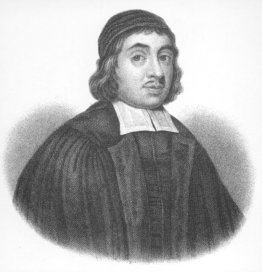
Here’s one that I’m now reading for the fourth time: The Art of Divine Contentment, by Thomas Watson, a 17th-century Puritan pastor and author.

Four times . . . Really?

Yes, it is that good. I need to be reminded often of the Bible’s teaching on contentment.

We are commanded to be content. “Keep your lives free from the love of money and be content with what you have, because God has said, ‘Never will I leave you; never will I forsake you’” (Hebrews 13:5).

I especially like Chapter 9, “How to Learn Contentment,” which contains 18 rules that show Christians how they can attain contentment. Here is Rule 10: “Often compare your condition.” Mr. Watson unpacks this principle by explaining five types of comparison that lead to a contented life. My favorite is comparison #1: “Let us compare our condition with what we deserve.”

Here are some of his comments on this biblical truth:

“If we have less than we desire, we have more than we deserve. For our mercies, we have deserved less. For our afflictions, we have deserved more. First, consider out mercies . . . What can we deserve? We live on free grace. . . Whatever we have is not merit, but bounty. The least bit of bread is more than God owes us. We can bring kindling to our funeral pyre, but we cannot add one flower to the garland of our own salvation. He who has the smallest mercy will die in God’s debt.”

Is this not what Scripture teaches?

David said it well. “He does not treat us as our sins deserve or repay us according to our iniquities” (Psalm 103:10). If God did treat us as our sins deserve, where would we all be right now?

In hell. But where are we right now?

This simple yet profound comparison, when practiced regularly with an attitude of joyful gratitude for God’s abundant grace toward us, is one way to learn contentment.

NOTE: There are many editions of Watson’s book available online. The one I’ve been reading is an unabridged, modern English translation by Jason Roth. This book was originally published in 1660 and is regarded as a Christian classic. Books such as this can be hard to read. Unfamiliar vocabulary and sentence structure can obscure the original meaning. This updated version makes Watson’s 17th-century writing style more accessible to readers today.

It is available on Amazon in Kindle and paperback here:
https://www.amazon.com/Art-Divine-Contentment-Modern-English-ebook/dp/B077XZ55G5/

Posted in Book Reviews | Tagged , , , , | Leave a comment

How to Worship God by Serving Your Neighbor

Do you find the Christian life to be easy or hard (or both)?

Jesus said that the way that leads to life is “hard” and the way that leads to destruction is “easy” (Matthew 7:13-14). Yet He also instructed us to “Take my yoke upon you . . . and you will find rest for your souls. For my yoke is easy, and my burden is light” (Matthew 11:29-30).


How can a yoke, which by definition is hard, also be easy? And how can a burden, which by definition is heavy, also be light? A paradox, for sure, as we are “sorrowful, yet always rejoicing” (2 Corinthians 6:10).

Certainly we can affirm that God expects us to work hard for His kingdom, and that such work will be hard work. We were “created in Christ Jesus for good works . . . that we should walk in them.” And we have been instructed to “do good to everyone” (Galatians 6:10).

Doing good works for our neighbor can be hard, and Scripture acknowledges this. Here are two passages that refer to acts of kindness with language reminiscent of an Old Testament sacrifice.

Passage #1
“Do not neglect to do good and to share what you have, for such sacrifices are pleasing to God” (Hebrews 13:16).

Doing good and sharing with others is described as a sacrifice. You give up something in order to benefit another. This may be painful to you, resulting in financial and/or emotional loss. Or maybe you give up use of your time. Yet you also benefit, because “such sacrifices are pleasing to God.” Doing the will of God brings you much joy and contentment, and knowing that He rejoices over your generosity is a reward in and of itself. Furthermore, God has promised to reward you abundantly in heaven for such demonstrations of love. In light of these temporal and eternal blessings, did the giver really lose anything?

Passage #2
“I have received full payment, and more. I am well supplied, having received from Epaphroditus the gifts you sent, a fragrant offering, a sacrifice acceptable and pleasing to God” (Philippians 4:18).

The Philippians sent Paul money to support him while he was in prison in Rome. Notice how this display of unselfish giving is portrayed not only as a sacrifice, but also as “a fragrant offering . . . acceptable and pleasing to God.”

To describe an act of kindness as a sacrifice to God adds much to our understanding of the meaning of “good works.” Doing good should be far more than a horizontal event. It is not merely the giving and receiving of love between human beings. This is also a vertical event. To give something of value to my neighbor is to offer a sacrifice to God. To feed my enemy is to worship my Lord. To return good for evil is to send a sweet aroma to heaven. And God accepts these gifts and is pleased with them because He is pleased with us for giving them, provided we do them with a heart of love that is tuned to sing His grace.

The Hardest Thing about Good Works
Here is one of the most startling verses in the Bible: “If I give away all I have, and if I deliver up my body to be burned, but have not love, I gain nothing” (1 Corinthians 13:3).

Does this verse mean what I think it means? Does Paul really mean that I can give away everything I own, and yet receive no benefit (such as the rewards God has promised) because this act of apparent kindness was not done out of love?

At first glance, this truth can be alarming, taking the wind from our sails and causing us to doubt what we do.

But the more we reflect on it, the more it makes sense. In the Old Testament, an animal sacrifice, if not offered with a heart of faith and repentance, became a meaningless ritual, turning an outward act of obedient worship into an ungodly activity. This happened repeatedly in Isaiah’s day. Listen to God’s rebuke of His people:

“The multitude of your sacrifices— what are they to me?” says the Lord. I have more than enough of burnt offerings, of rams and the fat of fattened animals; I have no pleasure in the blood of bulls and lambs and goats. When you come to appear before me, who has asked this of you, this trampling of my courts? Stop bringing meaningless offerings! Your incense is detestable to me.” (Isaiah 1:11-13)

Likewise, we must offer our sacrifices of service with a heart of love and compassion, for God is seeking “true worshipers . . . those who worship him . . . in spirit and truth” (John 4:23-24). May it be so.

Questions to Stimulate Your Response to the Comments Above:

  1. What can you do to cultivate the proper heart attitude when serving others?
  2. Who do you know in the household of faith who would benefit from an intentional act of kindness? What can you do this week to “do good” to this person as an intentional act of worship?
  3. Same question as #2 above, except replace “Who do you know in the household of faith” with “What outsider do you know . . .”
Posted in True Religion | Tagged , , , | Leave a comment

A Breathtaking Description of Jesus from Colossians 1:15-20

I recently read the book of Colossians and would like to share some thoughts about Jesus based on chapter 1, verses 15-20.

Here is one of the most stunning descriptions of the Lord Jesus Christ in all of Scripture:


15 He is the image of the invisible God, the firstborn of all creation. 16 For by him all things were created, in heaven and on earth, visible and invisible, whether thrones or dominions or rulers or authorities—all things were created through him and for him. 17 And he is before all things, and in him all things hold together. 18 And he is the head of the body, the church. He is the beginning, the firstborn from the dead, that in everything he might be preeminent. 19 For in him all the fullness of God was pleased to dwell, 20 and through him to reconcile to himself all things, whether on earth or in heaven, making peace by the blood of his cross.
Colossians 1:15-20 (ESV)

Jesus asked the apostles, “Who do you say I am?” Peter responded with these words: “You are the Christ, the Son of the living God” (Matthew 16:15-16).

In Colossians 1:15-20 we read how Paul answers the most important question ever asked:

Who is Jesus?

As the image of the invisible God and the dwelling place of all the fullness of God, Jesus is God.

Since all things were created by Jesus and through Jesus, He is the Creator of everything in the universe, both seen and unseen.

Because all things hold together in Jesus, He is the Sustainer and Maintainer of all that exists. All energy originates from Him. Every hurricane, tornado, earthquake, and flood is His doing, for Jesus controls the weather 24/7 – every drop of rain, every ray of sunshine, every stirring of a gentle breeze.

As the head of the church, Jesus is the supreme authority and Judge of His people. We answer to Jesus and are held accountable to Him for everything we think, say, and do. Every idle thought, every careless word, and every unintended action will one day be evaluated by Jesus, “For God will bring every deed into judgment, with every secret thing, whether good or evil” (Ecclesiastes 12:14). Yes, “the Father has given all judgment to the Son, that all may honor the Son” (John 5:23-24).

The purpose of everything that happens is found in Jesus because all things were created for Him and have as their ultimate goal His preeminence. Everything was made for the glory of Jesus. He is the reason that everything exists. Without Jesus, there is no meaning to anything and we remain the hopeless recipients of “the futile ways inherited from [our] forefathers” (1 Peter 1:18).

And because of what Jesus did on the cross, there is hope of reconciliation and redemption for the estranged and guilty prisoners who inhabit this planet. Only through the death of Jesus can enslaved transgressors find peace with their Maker, for His blood is the payment of the price that purchases our freedom from the bondage of sin. “We have redemption” in Him, and only in Him (Colossians 1:14). This is why the 24 elders sing a new song before Jesus the Lamb,

“Worthy are you to take the scroll and to open its seals,
for you were slain, and by your blood you ransomed people for God
    from every tribe and language and people and nation,
and you have made them a kingdom and priests to our God,
and they shall reign on the earth.”
Revelation 5:9-10

This is who Jesus is. This is what Jesus did. This is what Jesus will do for us, should we humble ourselves before Him and embrace Him with faith as our God, Creator, Redeemer, Reconciler, and Peace-Maker.

Who is Jesus? Jesus is breathtaking. Does He take your breath away?

Posted in Attributes of God, Jesus Christ | Tagged | Leave a comment

10 Reasons to Pray Today

Do you sometimes wonder what to pray for?

Or do you sometimes wish you had more substance to your prayers?

Here’s a surefire way to enhance your prayer life – for yourself and anyone else that you care about deeply:

Take a look at Paul’s prayers. When writing to the churches, he often told them, with great specificity, how he prayed for them.

For example, take a look at Colossians 1:9-12.

9  We have not ceased to pray for you, asking that you may be filled with the knowledge of his will in all spiritual wisdom and understanding, 10 so as to walk in a manner worthy of the Lord, fully pleasing to him: bearing fruit in every good work and increasing in the knowledge of God; 11 being strengthened with all power, according to his glorious might, for all endurance and patience with joy; 12 giving thanks to the Father, who has qualified you to share in the inheritance of the saints in light.

In just a few sentences, Paul tells the Colossians that he asks God to give them at least 9 spiritual blessings that will contribute to their sanctification (holiness):

1-knowledge of God’s will
2-spiritual wisdom and understanding
3-a life worthy of and pleasing to the Lord
4-the fruit of good works
5-greater knowledge of God
6-the strength of God’s power
7-endurance
8-patience
9-joy

Would you like to experience any (or all) of these qualities? Do you know anyone else who would benefit from a life of wisdom that pleases King Jesus, fruitful good works, deeper knowledge of God and his will, along with the strength, endurance, patience, and joy that only the Holy Spirit can provide?

Why not take time this week and pray the prayer of Colossians 1:9-14 for yourself and your loved ones?

And don’t forget a 10th reason for prayer – to express your gratitude to God. “Giving thanks to the Father, who has qualified you to share in the inheritance of the saints in light” (v. 12). Because of God’s grace, he has given us the promise of an eternal inheritance. What an incredible reason to pour out your thanksgiving and praise to him!

Posted in Prayer | Tagged , | Leave a comment

How to Talk about Abortion and the Sanctity of Life

With the recent Supreme Court decision to overturn Roe v. Wade, opportunities abound to discuss the question, “When does a human being become a human being?”

At conception?
When there is evidence of a heartbeat?
At birth?

Here is a great resource to help you prepare for such conversations.

How to Defend Pro-Life Views in 5 Minutes, by Scott Klusendorf, will do just that.
https://www.crossway.org/articles/how-to-defend-pro-life-views-in-5-minutes/

Scott Klusendorf is the president of Life Training Institute, where he trains pro-life advocates to persuasively defend their views. A passionate and engaging platform speaker, Scott’s pro-life presentations have been featured by Focus on the Family, Truths That Transform, and American Family Radio.

And for more resources on abortion and the sanctify of life, check out:
https://www.crossway.org/articles/resources-related-to-abortion-and-the-sanctity-of-life/

Here you’ll find a link to a free copy of Scott’s ebook, The Case for Life, along with articles by Wayne Grudem entitled, How to Biblically Defend the Sanctity of Life and 5 Questions about the Sanctity of Life, which addresses these questions:
— Does the Bible consider a fetus a child?
— Is abortion okay in the case that the pregnancy resulted from rape or incest?
— Is abortion an appropriate measure if the mother’s life is at risk?

Posted in Motherhood, Parenting | Tagged , , , | Leave a comment

7 Truths about Biblical Meditation

There are many beneficial ways to hear God’s Word.

Because we love God and want to know Him better, we turn to His Word and listen to it, read it, study it and sing it, all with a view to obeying it.


For those who incorporate these practices into their lives, blessings are promised and received in abundance: “Blessed is the one who reads aloud the words of this prophecy, and blessed are those who hear, and who keep what is written in it” (Revelation 1:3).

Scripture is filled with examples of godly people who demonstrate their love for God through their love of His Word. One such saint is the writer of Psalm 119. At least 10 times he articulates his love for God by writing about his love for God’s Word. “Oh how I love your law!” (v. 97). (See also verses 47, 48, 113, 119, 127, 140, 159, 163, 167)

The psalmist also tells us one specific way that he expresses his love for the Word: “Oh how I love your law; I meditate on it all day long” (Psalm 119:97). Meditating on Scripture is a recurring theme in Psalm 119; it is mentioned eight times! (see verses 15, 23, 27, 48, 78, 97, 99, 148). Surely we would do well to take a closer look at this often overlooked response to hearing the Word.

7 Truths about Biblical Meditation

1. God commands it.
Before Israel took possession of Canaan, the Lord told Joshua, “Do not let this Book of the Law depart from your mouth; meditate on it day and night, so that you may be careful to do everything written in it. Then you will be prosperous and successful” (Joshua 1:6-8)

2. Godly people habitually practice it.
As mentioned above, the writer of Psalm 119 meditated on the Word “all day long” (v. 97). Or, as the Common English Bible renders it, “I love your instruction! I think about it constantly.”

3. The Word of God is the focus of it.
Biblical meditation is focusing on God’s truth as revealed in Scripture. Paul wanted the Colossians to “Let the word of Christ dwell in you richly as you teach and admonish one another with all wisdom” (Colossians 3:16)

4. Prolonged repetition and contemplation is the essence of it.
Pastor Tony Opliger provides this explanation of the meaning of “hagah,” the Hebrew word for meditate.

Hagah means: to utter, to murmur . . . it is like when you look up a phone number and you have to try to remember it while you take a few steps across the room to get your phone or write it down. 123-4567. Repeat. Repeat. Repeat. Uttering and murmuring as you try to remember it. And that is hagah.

Hagah is also what cows do when they eat . . . When a cow eats, it slowly chews its food for a while — then it swallows it — and then a bit later, it burps the partially digested food back up into its mouth. And then the cow chews it some more — and then it swallows again — and then a bit later, burps it up again — right back into its mouth — and then it chews the food even more — and apparently this can go on for hours until the food is fully digested. And that is a picture of hagah. That is meditating.

“It is chewing on the Word of God — it is feasting on or plugging into the Word — it is actively pondering it by uttering or murmuring to oneself over and over and over again. You see, eastern meditation is an emptying of the mind — but biblical meditation is filling the mind (and even the mouth) with the Words of God.”

5. Personal holiness is the intended result and evidence of it.
Meditation is never an end in itself. God instructed Joshua to meditate on the Word so that you may be careful to do everything written in it” (Joshua 1:8). This is why the psalmist wrote, “I have hidden your word in my heart, that I might not sin against you” (Psalm 119:11).

6. Memorizing Scripture is one great way to practice it.
How did the psalmist meditate on the Word “all day long”? (Psalm 119:97). How did he “hide” or “store” the Word in his heart? (Psalm 119:11). He memorized it.

7. Resources abound to help you develop it.
Yes, memorizing Bible verses is not just for children. Adults, too, can cultivate this habit and reap the blessing of God for doing so. If your church promotes Scripture memorization for children, why not memorize the same verses? Get yourself an accountability partner and do it with your spouse or a Christian friend. Or invite your small group to do this together.

Perhaps you already memorize Scripture regularly. If so, great! If not, here are two websites to help you get started:

Navigators “Topical Memory System”
https://www.navigators.org/resource/topical-memory-system/

Fighter Verses
https://www.fighterverses.com/

NOTE: this post is adapted from Wayne’ book, 7 Deadly Sins of Bible Reading: Common Bible Reading Mistakes and How to Avoid Them.


Posted in Bible memorization, Bible reading, Psalm 119 | Tagged , , | Leave a comment

God’s Answer to the “Why” Question

For centuries, people have been seeking answers to life’s most important questions: “How did we get here?” “Why are we here?” “What is the meaning and purpose of life?”

It’s NOT About Us
Fortunately, God has provided clear answers to these questions in His Word. God created us, and He put us on this planet for a specific purpose: “Bring my sons from afar and my daughters from the end of the earth, everyone who is called by my name, whom I created for my glory, whom I formed and made” (Isaiah 43:6-7).

God tells us that He formed us “for His glory.” Furthermore, Scripture reveals that God made everything for His glory: “The heavens declare the glory of God” (Psalm 19:1). “For from him and through him and to him are all things. To him be glory forever” (Romans 11:36). “For by him all things were created, in heaven and on earth . . . all things were created through him and for him” (Colossians 1:16).

The title of a Max Lucado book communicates well the paradoxical truth that the meaning and purpose of my life is not found in me because It’s Not About Me. “It’s about God. And that’s an understatement. God created us to know him and love him and show him” (John Piper). Our mission in life, then, “whether you eat or drink, or whatever you do,” is to “do all to the glory of God” (1 Corinthians 10:31).

But what does it mean to glorify God? How do we do that? Sometimes the repeated use of a word can cloud its meaning.

Another word that Scripture uses to summarize the reason for our existence is worship. The Apostle John saw a vision of “those who conquered the beast,” singing “the song of Moses . . . and the song of the Lamb, saying, ‘Great and amazing are your deeds, O Lord God the Almighty! Just and true are your ways, O King of the nations!  Who will not fear, O Lord, and glorify your name? For you alone are holy. All nations will come and worship you, for your righteous acts have been revealed” (Revelation 15:2-4).

If, according to the Westminster Shorter Catechism, our “chief end is to glorify God, and to enjoy Him forever,” we fulfill that purpose through worshipping the Creator. A bird was made to fly; a fish, to swim. And humans were created to worship God. This is why we are here. “We exist for Him” because “we exist through Him” (1 Corinthians 8:6).

Humanity, We Have an Insurmountable Problem
But, alas, we have a problem that prevents us from doing what God made us to do. That dilemma is our sin, which separates us from God and alienates us from our Maker. “Your iniquities have made a separation between you and your God, and your sins have hidden his face from you so that he does not hear” (Isaiah 59:2). Sin creates a barrier between us and God. He is the Holy One, “of purer eyes than to see evil and cannot look at wrong” (Habakkuk 1:13). How can we worship God when He cannot even look at us?

Every human being is born with a humanly incurable disease, cancer of the soul. “The heart is deceitful above all things, and desperately sick; who can understand it?” (Jeremiah 17:9). We do not become a sinner by sinning. We sin because we are born a sinner. “Behold, I was brought forth in iniquity, and in sin did my mother conceive me” (Psalm 51:5).

Here’s even more bad news:  our sinful condition causes God to pronounce the death sentence of hell over us. Long before Judgment Day, the unrepentant sinner has already been condemned in the courtroom of heaven. “Whoever does not believe is condemned already, because he has not believed in the name of the only Son of God” (John 3:18).

Furthermore, there is nothing we can do to save ourselves from this predicament. “We have all become like one who is unclean, and all our righteous deeds are like a polluted garment” (Isaiah 64:6).

The Two Sweetest Words in the Bible
“But God, being rich in mercy, because of the great love with which he loved us, even when we were dead in our trespasses, made us alive with Christ – by grace you have been saved” (Ephesians 2:4-5). God has taken the initiative to solve the unsolvable. God is not only holy and just, He is also compassionate, gracious, and loving. He has provided a Savior, the Lord Jesus Christ, who came to “save his people from their sins” (Matthew 1:21) and thereby bridge the gap between us and God.

Through His death on the cross, Jesus paid the penalty of our sin. God poured out His wrath on His Son instead of us, and through faith in Jesus, God declares the guilty criminal to be righteous in His sight.

Now we can worship God acceptably, “for he has clothed me with the garments of salvation; he has covered me with the robe of righteousness” (Isaiah 61:10).

Because God justifies us “by his grace as a gift” (Romans 3:24), we can glorify Him both now and forever more. Salvation is the work of God to transform wretches into worshippers. “Jesus was born of a virgin, suffered under Pontius Pilate, died on the cross and rose from the grave to make worshippers out of rebels!” (A.W. Tozer, Whatever Happened to Worship?).

Posted in Thoughts About God | Leave a comment

The Compassion of the Father

My wife Julie and I have been reading A Layman Looks at the Lord’s Prayer by W. Phillip Keller. He is best known for A Shepherd Looks at Psalm 23, which we read last year. His writing is rich with biblical insights and I commend his books to you.

In A Layman Looks at the Lord’s Prayer, Mr. Keller takes you through the Lord’s prayer phrase by phrase. The chapter on “Your kingdom comes” contains a section that articulates precisely what I have experienced. At age 26 I foolishly walked away from God and lived as a practical atheist for 20+ years.

I have been asked, “Why did you do that?”

I can answer that question with these words from Mr. Keller:

“The great majority are utterly unwilling to surrender the sovereignty of their lives to God. They have no intention whatever of abdicating the throne of their inner wills and hearts to the King of Glory. They are no more prepared or willing to accept the rulership of Christ than were those who shouted at His crucifixion, “We have no king but Caesar!”

“When all is said and done, most of us from our earliest childhood believe we are the king of our own castle. We determine our own destinies; we arrange our own affairs: we govern our own lives. We become supreme specialists in selfish, self-centered living where all of life revolves around the epicenter of me, I, mine.

“So, if I sincerely, earnestly, and genuinely implore God to come into my life and experiences, there to establish His kingdom, I can only expect that there is bound to be a most tremendous confrontation. It is inevitable that there will follow a formidable conflict between His divine sovereignty any my self-willed ego.

“When I pray, “Thy kingdom come,” I am willing to relinquish the rule of my own life, to give up governing my own affairs, to abstain from making my own decisions in order to allow God, by His indwelling Spirit, to decide for me what I shall do.”

These words get right to the heart of why I wanted nothing to do with God, His Word, and His people for so many years. I wanted to run my life. Luke 19:14 was my creed: “I do not want this man to reign over me.”

I acted as if God didn’t exist because I did not want to be accountable to Him. This is the essence of human pride and self-absorption.

And of course, I was stupid enough to believe this was the “right” way to live, totally oblivious to the fact that I was on the broad road that leads to destruction (Matthew 7:13).

Oh, how thankful I am today that my stubborn rebellion was no match for God’s amazing grace. While I was His enemy, He still loved me and by the death of His Son, I was “reconciled to God” (Romans 5:10). He overcame my stiff-necked resistance and drew me to Jesus (John 6:44). The Holy Spirit convicted me of the utter sinfulness of my sin, my need for His righteousness, and the eternal consequences of Judgement Day (John 16:8). What a wonderful Father we have!

“The Lord is merciful and gracious, slow to anger and abounding in steadfast love . . . As a father shows compassion to his children, so the Lord shows compassion to those who fear him” (Psalm 103:8, 13).

Does any of this resonate with you? If so, let me know by leaving a comment below. I’d love to hear what our heavenly Father has done for you.

Posted in Attributes of God, Salvation, Thoughts About God | Tagged , | Leave a comment

What to Do When Your Spiritual Life Is Dry

“All Christians experience spiritual dry spells.”

It’s good to acknowledge the inevitability of this, to recognize when it happens, and to be ready to take action to deal with it.


Scott Slayton has written an excellent article on this topic entitled When Your Spiritual Life Is Dry.

https://www.patheos.com/blogs/onedegreetoanother/2018/04/spiritual-life-dry/

He continues:

“There are no exceptions. We will go through periods where God seems distant, prayer is difficult, Bible-reading feels dead, worship doesn’t excite, and a sense of purposelessness descends on us.”

“When you run into a spiritual desert, what do you do? I want to suggest ten strategies for dealing with a spiritual dry spell. I am not advocating that you try all ten, but rather that you try several of them in order to help regain your focus and experience the joy of your walk with the Lord again.”

All ten of these strategies are worthy of your consideration. I especially like #1 and #2. Both of them have served me well.

1-Remember the Gospel
2-Change Your Bible Reading Routine

With each strategy, Mr. Slayton offers a short but meaty explanation that includes the rationale and practical advice on implementation.

One final comment . . . You don’t need to be experiencing spiritual dryness to benefit from this article. No matter what your walk with God looks like today, you will benefit from the biblical wisdom provided here:

https://www.patheos.com/blogs/onedegreetoanother/2018/04/spiritual-life-dry/


Posted in Bible reading | Tagged , | Leave a comment

What is the Unpardonable Sin? (Mark 3:22-30)


Have you ever wondered what Jesus meant when he said, “whoever blasphemes against the Holy Spirit never has forgiveness” (Mark 3:29)?

Let’s take a closer look.

In Mark 3:22-30 we read about an encounter between Jesus and the leaders of first-century Judaism. Jesus was in Galilee, traveling from town to town, preaching the gospel of the kingdom, teaching the Word of God, and demonstrating his divine power by healing the sick and driving out demons.

Then some “teachers of the law who came down from Jerusalem” offer their opinion of this miracle worker from Nazareth. “He is possessed by Beelzebub! By the prince of demons he is driving out demons” (Mark 3:22).

These men could not deny Jesus’ miracles. But somehow they had to account for them. So they concluded that Jesus got his power from the devil. He was possessed by Beelzebub (an ancient name for Satan), “the prince of demons.” Or he was possessed by an evil spirit (Mark 3:30).

It is in this context that Jesus makes his well-known statement: “All the sins and blasphemies of men will be forgiven them. But whoever blasphemes against the Holy Spirit will never be forgiven; he is guilty of an eternal sin” (Mark 3:28-29).

Jesus is saying that there is a sin that will never be forgiven. This sin is described simply as blasphemy against the Holy Spirit.

What is this sin? And why isn’t this sin forgivable? People have been asking this question for centuries. We all want to know what it is.

The context of this passage tells us what it is. The unpardonable sin is the rejection of Jesus as the Messiah and Son of God. This is what it means to blaspheme against the Holy Spirit because the Holy Spirit was prominent in the ministry of Jesus. When Jesus was baptized, the Spirit came down on him like a dove and the Father spoke from heaven, saying to Jesus, “You are my Son” (Mark 1:11).

Jesus was empowered by the Spirit of God because he was the Son of God. He said so himself: “But if I drive out demons by the finger of God, then the kingdom of God has come upon you” (Luke 11:20). And the Pharisees and other religious leaders rejected that claim outright and announced their belief that Jesus was the servant of Satan rather than the servant of God.

Can a person commit the unpardonable sin today? Absolutely. Like the Pharisees, if anyone refuses to believe that Jesus is the Son of God, and remains in that state of unbelief until death, then the sin of rejecting Christ will not be forgiven. The sin is unpardonable because once we die in unbelief and face God on Judgment Day, it will be too late for faith. Our eternal destiny is determined by the choice we make in this life regarding the identity of Jesus of Nazareth. If we accept him as the Son of God, we avoid the unpardonable sin. If we reject him as the Son of God and never repent of that sin, we commit the unpardonable sin and this sin becomes eternal because the consequences of that sin are eternal punishment.

For Christians, knowing the meaning of Mark 3:29 should be the source of much comfort, joy, and hope. Since we have embraced Jesus as King and accepted his claim to be God, I’m convinced that a true believer in Jesus cannot commit the unpardonable sin.

For more straightforward Bible teaching, check out my books on Amazon.
www.Amazon.com/author/waynedavies

Posted in Gospel of Mark Bible Study | Tagged , , | Leave a comment