
The Power of a Memory


What I remember most about her room was the smell — a strange mixture of incense, smoke, and alcohol.

I rarely went into my sister’s bedroom, but one day in 1972 I was compelled to do so.

I had recently made a profession of faith in Jesus. As a high school freshman, I had heard the gospel by attending a Baptist church with a good friend. I had been reading the Bible and was learning much about Christianity.

Meanwhile, my sister, two years older, was spending time with a different crowd. Substance abuse was the activity of choice for her and her friends. Drugs and alcohol had become her constant companion. And I could see the effect this was having on her. She was seldom sober.

I had to do something. So I picked up a Bible and knocked on her door. She told me to come in. As I sat down on the couch directly across from her bed, I looked at her and could see the dazed look in her eyes.  She was, as we said back then, stoned.

I asked her: “Is this the kind of life you want to live?”

I don’t remember what she might have said in response. Probably nothing. But I knew she could hear me. Even people in a coma can hear you. It didn’t matter what state she was in. All I knew was that the Book in my hand contained the message that could liberate her from this prison she was in. She was a slave who needed to be set free.

I opened my Bible and turned to John chapter 3. I read the story of Jesus and Nicodemus. I read John 3:16 to her. And then I said, “You need a new life. You need to be born again.”

Then I gave her the Bible and left. I don’t know how long I was there. Maybe 5 or 10 minutes max.

Do you believe in the power of the gospel? Do you believe that God can save anyone, no matter what they’ve done or what condition they are in? No matter how depressed or how drunk or how angry or how depressed or how violent?

I do. I believe God can save anybody, anytime, anywhere. Only one thing is needed: the Word of God must be present. The message of the gospel must be communicated in some way, shape or form, and then the Holy Spirit can take over and come into a person’s heart and change them from the inside out, granting the gift of repentance and saving faith, and in the process of doing that, He forgives all their sin and sets them free from both the penalty and power of sin.

I believe that God can save anybody because the Bible says so.

“Then they cried to the Lord in their trouble, and he saved them from their distress. He brought them out of darkness and the deepest gloom and broke away their chains. Let them give thanks to the Lord for his unfailing love and his wonderful deeds for men, for he breaks gates of bronze and cuts through bars of iron” (Psalm 107:14-16).

I believe that God can save anybody because He saved me. Watching my sister’s life deteriorate before my eyes was enough negative reinforcement for me to stay away from alcohol and drugs. But I am just as much a sinner as my sister. I needed forgiveness of sins just as much as she did.

My sister’s conversion experience is, in some ways, more dramatic than mine. But God didn’t liberate her on the day I entered her room and gave her a Bible. A few years later, however, while watching a TV evangelist, she heard the gospel again and suddenly remembered, “That’s what Wayne was trying to tell me.”

Do you ever wonder whether people can be set free from sin by watching television? Yes, God can even save someone while watching TV, because that’s what happened to my sister. While hearing the gospel on television, she committed her life to Christ and started reading the Bible I gave her, which she had kept. It wasn’t easy, but my sister was liberated from a life of substance abuse. Jesus set her free.

In 2006, some 34 years after I shared the gospel with my sister, she sent me a birthday card and wrote these words:

“Wayne, I love you so much. Thank you for planting the seeds of the Word of the gospel, especially John 3:16, back when we were in high school. I can to this day remember the witness you gave me. Your boldness saved me from eternal hell.”

She signed the card, “Your sister who can’t wait to worship our Lord forever.”

I have many memories of my sister. She had a smile that could light up a room. When she laughed, it was contagious, and you couldn’t help but laugh with her.

My sister passed away in 2019. I miss her deeply, more than words can say. Her birthday is March 23, so I just wanted to say, “Happy Birthday, Sheryl! Have a great day with Jesus!”

She couldn’t wait to be with Jesus, to sit at His feet and praise His holy name. That wait is over, for her faith is now sight.

NOTE: The above post is an excerpt from the book, Top 10 Reasons to Read the Bible TodayAvailable on Amazon. (The Kindle version is free.)

Posted in Evangelism, Salvation | Tagged | 2 Comments

Why Bible Knowledge is Essential but Never Enough

I’ve been reading Humility: True Greatness, by C.J. Mahaney, for the third time. Yes, it’s that good.

Every time I read this book, I am stopped in my tracks, stunned by the Word of God and the way this man explains Biblical truth in profound ways.

Here’s a reminder from the author that knowing the Bible is never an end in itself but rather the means to so much more.

“Though knowledge of Scripture is essential and not optional, by itself it’s never sufficient. As James reminds us, ‘Be doers of the word, and not hearers only, deceiving yourselves’ (James 1:22).

In his commentary of James, Peter Davids writes:

‘No matter how extensive one’s scriptural knowledge, or how amazing one’s memory, it is self-deception if that is all there is. True knowledge is the prelude to action, and is it the obedience to the Word that counts in the end.’

Mere knowledge of Scripture is not the pinnacle; it’s only the prelude to active obedience, and that’s all that ultimately counts. This truth is present in our Savior’s words: ‘If you know these things, blessed are you if you do them’ (John 13:17).

It’s not complicated! Only obedience is sufficient. Only our grace-motivated obedience and application of holy Scripture can produce growth in godliness.”

Bible knowledge, and the study we do to obtain it, is not enough to please God. Note what the psalmist prays for here: “Teach me, O LORD, to follow your decrees; then I will keep them to the end” (Psalm 119:33).

Even a thorough understanding of Scripture is not enough. This is why the psalmist prayed, “Give me understanding, and I will keep your law and obey it with all my heart” (Psalm 119:34).

The psalmist prays to not only understand the Word, but that God would enable him to follow, keep and obey the Word.

This is a convicting truth. May we take it to heart and spend much time learning the Word in order to do the Word . . . with all our hearts.

Posted in Bible reading | Tagged , | Leave a comment

Where to Go When Death Comes Near

Do you ever think about heaven?

I’ve been thinking about it a lot this week, because a good friend died recently. She was a believer and participated in our home Bible study for many years. We knew her well and saying good-bye has been a bittersweet mixture of sorrow and joy.

What do you do when death comes near? Where do you go to mourn and be comforted?

On Thursday night our small group spent two hours remembering and celebrating the life and faith of our departed sister. We read and discussed several Bible passages that tell us what happens to a believer who leaves this world and enters the next.

When death came, this is where we went to draw near to God and one another . . .

Philippians 1:21-23
21 
For to me to live is Christ, and to die is gain22 If I am to live in the flesh, that means fruitful labor for me. Yet which I shall choose I cannot tell. 23 I am hard pressed between the two. My desire is to depart and be with Christ, for that is far better.

2 Corinthians 5:6-9
So we are always of good courage. We know that while we are at home in the body we are away from the Lord, for we walk by faith, not by sight. Yes, we are of good courage, and we would rather be away from the body and at home with the Lord.

Psalm 49:15
But God will redeem me from the realm of the dead; he will surely take me to himself.

John 14:1-3
Let not your hearts be troubled. Believe in God; believe also in me. In my Father’s house are many rooms. If it were not so, would I have told you that I go to prepare a place for you? And if I go and prepare a place for you, I will come again and will take you to myself, that where I am you may be also.

Psalm 16:9-11
Therefore my heart is glad and my tongue rejoices; my body also will rest secure, 10 because you will not abandon me to the realm of the dead, nor will you let your faithful one see decay. 11 You make known to me the path of life; you will fill me with joy in your presence, with eternal pleasures at your right hand.

John 17:24
24 
“Father, I want those you have given me to be with me where I am, and to see my glory, the glory you have given me because you loved me before the creation of the world.

These passages, and many others, tell us that while heaven is a spectacular place beyond our wildest dreams, the focus of heaven is a Person. I love it when people ask, “What is heaven going to be like?” The answer is right here in these verses: To go to heaven is to be with Christ, where He is, at home with the Lord, taken to Him, filled with joy in His presence, receiving eternal pleasures at His right hand, seeing His glory forever.

That’s what heaven is all about – the experience of never-ending satisfaction in the presence of God. For the believer, the best is always yet to come, for our best life is never in this life. It awaits us in the next. Until then, we can know but a foretaste of glory divine by living out Paul’s instruction in Colossians 3:1-2.

“Since, then, you have been raised with Christ, set your hearts on things above, where Christ is, seated at the right hand of God. Set your minds on things above, not on earthly things. For you died, and your life is now hidden with Christ in God. When Christ, who is your life, appears, then you also will appear with him in glory.”

Aren’t you glad God has revealed these truths to us in His Word? I am.

Because of these precious promises, when a believer dies, we can be “sorrowful, yet always rejoicing” (2 Corinthians 6:10). Amen?

Please take time today to reflect on these questions:
1. Of the seven passages quoted above, which one is your favorite, and why?
2. Based on these passages, how do you describe what heaven is like?
3. How does the hope of heaven make a difference in your life on earth?

And if you find anything in this post helpful, please let me know by leaving a comment below.

Posted in Jesus Christ, Salvation | Tagged , | Leave a comment

5 Ways to Get a Grip on Your Bible

One of my favorite ministries is The Navigators. Their mission is “To know Christ, make Him known, and help others do the same.” They’ve been doing that faithfully since 1933.

I love their Bible-based resources that get me into the Word and keep me there. I’ve been using their New Testament Bible Reading Plan for many years. If you’re looking for a simple yet effective way to make Bible reading a daily habit, you can access a free downloadable copy here:
www.navlink.org/newtestament

Here’s another wonderful Navigators Discipleship Tool: “The Word Hand,” or what could be called “5 Ways to Get a Grip on Your Bible.” Using your thumb and four fingers, this 1-page illustration is an easy-to-remember tool that highlights five methods of learning from the Bible. Get your free copy here:
www.navlink.org/word-hand

As you read reflect on these 5 methods, ask yourself these questions:
How are you doing in each of these 5 areas?
Which one(s) do you consider a strength?
Which one(s) do you consider a weakness?
As you seek to cultivate a higher level of competency in each area, how can others pray for you?

One of those five Bible learning methods is Scripture memorization. That’s the one I tend to neglect. How about you? Just last week I discovered this Navigators gem, Hide God’s Word in Your Heart. This 17-page eBook helps you memorize one key Bible verse each week for the next 4 weeks. I’ve made a commitment to God to hide these 4 verses in my heart. Will you join me? Get your free copy of the eBook here:
https://www.navigators.org/mk212206-scripture-memory-intensive/

You’ll find a boatload of other great resources on the Navigators website. Enjoy!

Posted in Bible memorization, Bible reading | Tagged , , , , | Leave a comment

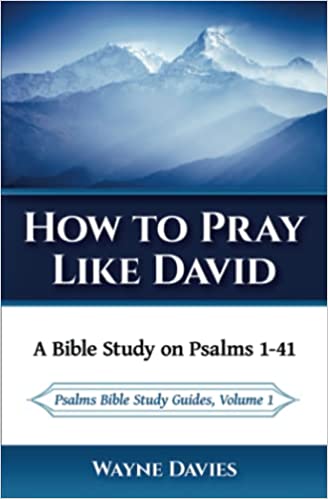
How to Pray Like David


What’s the best book in the Bible to learn how to pray?

You can probably think of several. So can I.

Certainly the book of Psalms should be included, don’t you think? I’m convinced that it is one of the best books of the Bible to learn how to pray.

That’s why I wrote my latest book . . .
How to Pray Like David:
A Bible Study on Psalms 1-41


It is now available on Amazon in Kindle and paperback formats.

Here’s what readers are saying . . .

“This book is simply fantastic! I love the goal of giving lots of ways to apply each psalm into one’s life. I love the format and the content and the superb insights and the focus on application that you have woven into this book. I definitely think this book meets a need that is ‘out there’ for helping to get people into the Psalms with more than merely surface comments on this amazing book in the Bible. You really give the reader excellent things to consider out of each psalm. Superb! I know it is blessing me greatly.”
— Dan Smythe, The Timothy Initiative Ministry Ambassador


“I truly loved this book. I most liked the questions at the end of each chapter for further reflection and discussion.”
— Geri Evans


“Your writing on each Psalm drew me into God’s Word, and your study questions made me desire to study well and deep and apply what I was learning to my life. Here are some things in particular that I loved about this book:

1. All the applications that are everywhere! Study without application is useless and merely head knowledge. I need things applied to my heart! And I love how you continually reminded the reader to do that.

2. I will greatly profit in my own application through all the authors who are quoted in this study: Boice, Packer, Spurgeon, Piper, Tozer, and probably some more that I’ve forgotten to list!

3. The Gospel message is clearly presented in several places for people that may not truly understand what it is. I especially saw that in the study on Psalm 24. Just excellent!

4. Throughout this study, I see your love for the Lord and the joy in your salvation shining through. Your testimony on page 66 is remarkable. I too am a prodigal, and I understand the gratefulness and humility (although God still points out daily the pride that remains in my heart!) that comes from knowing that God was patient with me, and loved me–despite my sin and me turning my back on him! This book is a testimony of your joy and thanksgiving for your salvation as God graciously turned your heart back towards him. Even though I still suffer consequences of my past sin, yet I am still grateful that God allowed me to go my own way. For me, that was probably the only way for him to truly open my eyes and see that I am his creature, and not my own. I am always  reminded of Psalm 119:67, 71, and 75. I am very grateful for God’s affliction–that bitter medicine of his discipline that he has allowed in my life “that I might learn your statutes” (Ps. 119:71). His mercy and grace are humbling, and he is faithful to discipline those whom he loves. I see your experience of that throughout this study as I see your love and devotion to our gracious God.

5. The additional resources listed in Appendix A. Excellent and trustworthy.

6. The more in-depth study of Psalm 1 in Appendix B.

7. The cross references between the Psalms and the Old Testament, and also those between the Psalms and the New Testament. And they are everywhere! I love seeing how (as always!) God’s Word is the best commentary on Scripture.”
— Georgia Schoelz


“This book is not a verse-by-verse commentary, but it is a compilation of lessons Mr.  Davies has learned from Psalms 1-41. There is one chapter for each of these Psalms. Each chapter begins with an explanation of something God has taught him from that psalm. This is followed by “Questions for Further Study, Reflection and Discussion.” These questions guide the reader into a better understanding of the psalm by prompting him to interact with the text.

I appreciate the comprehensive nature of the introduction because it let me know what to expect in the rest of the book. I also liked the short chapters and the questions that followed –this format inspired me to do my own thinking and application. The questions sometimes covered material not mentioned in the explanation of each thought.

Although I had read all the Psalms many times, I gained a greater understanding of Psalms 1-41 after reading the book. I learned how to pray more effectively. Each chapter spoke to a need in my life. I recommend the book highly. I plan to reread this book one chapter at a time and write my answers to each question. We live in an Independent Living Apartment. I would like to share what God is teaching me through the Psalms with some of the residents here.”
— Ken Dover

To access excerpts from the book, please click Here (Chapter 12) and Here (Chapter 40).

Posted in Prayer, Thoughts on the Psalms, Uncategorized | Leave a comment

How to Pray Like Jesus

In Mark 1:35 we read an amazing verse. “Very early in the morning, while it was still dark, Jesus got up, left the house and went off to a solitary place, where he prayed.”

Jesus Christ, the Son of God, made time alone with God a top priority. He woke up before dawn and found a place to be by himself to pray to his Father in heaven.

This early morning prayer time was likely a habit for Jesus. He had a relationship of deep intimacy with the Father. He had spent eternity past in divine fellowship with the Father and the Spirit. Yet coming to earth did not prevent him from continuing to commune with God.

The book of Luke provides much insight into the prayer life of Jesus. Of the four gospels, Luke devotes the most attention to Jesus’ prayers in a variety of situations.

Jesus prayed while being baptized (Luke 3:21-22)
Only Luke tells us that Jesus was praying at his baptism in the Jordan River. “As he was praying, heaven opened and the Holy Spirit descended on him in bodily form like a dove.” Here we have a beautiful picture of the divine communion of the Trinity – the Son is talking to the Father, the Spirit comes down on the Son, and the Father says to the Son, “You are my Son, whom I love; with you I am well pleased.”

Jesus prayed for extended periods of time (Luke 6:12-16)
When faced with an important decision, such as the choosing of his twelve apostles, Jesus spent all night in prayer. “Jesus went into the hills to pray, and spent the night praying. When morning came, he called his disciples to him and chose twelve of them, whom he also designated apostles” (Luke 6:12-13).

Jesus prayed before eating (Luke 9:16, 22:17,19)
Does it really matter whether we stop and give thanks for food before eating? Jesus thought it did. Before feeding the 5,000, Jesus took “the five loaves and the two fish and looking up to heaven, he gave thanks and broke them.” Likewise, at the last supper, “he gave thanks” for both the bread and the wine.

Jesus prayed with his disciples (Luke 9:28)
As indicated above in Mark 1:35 and Luke 6:12, Jesus spent time alone in prayer. But he also prayed with his disciples. “He took Peter, John and James with him and went onto a mountain to pray.”

Jesus prayed on his knees (Luke 22:41)
We can pray anytime, anywhere, with any posture. But sometimes our need for God is so great, getting down on our faces is appropriate and even necessary. On the night of his betrayal, Jesus spent much time in prayer to prepare for his suffering and crucifixion, and therefore “he knelt down and prayed, ‘Father, if you are willing, take this cup from me; yet not my will, but yours be done.'”

Jesus prayed with great passion (Luke 22:44)
Again, Jesus’ prayers in the garden of Gethsemane on the eve of his death reached a level of intensity that is difficult to fathom. “And being in anguish, he prayed more earnestly, and his sweat was like drops of blood falling to the ground.”

How is your prayer life these days? The gospels present the Son of Man as the Man of Prayer.

Please take time today to examine yourself in light of the prayer life of Jesus. Ask yourself these questions: Do I spend time alone with God in prayer every day? Do I pray throughout the day, even while engaged in life-changing events? Do I spend long periods of time in prayer, especially when facing important decisions? Do I remember to thank God for food before I eat it? Do I regularly pray with and for other believers? Do I pray on my knees when the situation warrants it? Do I pray with passion?

May the example of Jesus motivate us to “pray continually” and to “give thanks in all circumstances, for this is God’s will for you in Christ Jesus” (1 Thessalonians 5:17).

Posted in Jesus Christ, Prayer | Tagged , | Leave a comment

How to Delight in the Flawless Word of God

The Bible claims to be, and is, the very Word of God. Yes, the words of this book were written by people, and each human author utilized his particular writing style and vocabulary, but the ultimate source of Scripture is Almighty God himself.

Psalm 12:6 is one of many verses in the Bible to make this bold statement. Let’s take a closer look at what David meant when he said, “The words of the LORD are flawless, like silver refined in a furnace of clay, purified seven times” (Psalm 12:6 NIV 1978).

The word “flawless” means pure. But let’s not take David’s analogy to its illogical extreme. The Word of God was not impure and therefore in need of purifying. The point here is that Scripture contains no impurities; it never has and it never will. What is in view is the finished product.

How can this be? The perfection of Scripture is the direct result of its divine origin. The Bible is infallible because it is inspired, or breathed out, by God.

We can express the relationship between the inspiration and infallibility of the Bible like this:

  1. Scripture claims to be the very Word of God because every word of it comes from his mouth. 2 Timothy 3:16 makes this clear. “All Scripture is God-breathed.”
  2. God cannot lie. He always speaks the truth. Hebrews 6:18, “It is impossible for God to lie.”
  3. Therefore, the Scriptures contain no errors. Psalm 12:6, “And the words of the Lord are flawless.”

Other verses that teach these concepts include Psalm 18:30, “As for God, his way is perfect; the word of the Lord is flawless” and Psalm 119:160, “All your words are true.”

Wow! Isn’t this wonderful news? With so much uncertainty in the world, aren’t we blessed to have the perfect Word of God in our hands to read and treasure every day of our lives?

I must ask you: How are you feeling today about the inspiration and infallibility of the Bible? Do you have gratitude in your heart toward God for the amazing gift of Scripture? Can you say with the psalmist, “At midnight I rise to give thanks for your righteous laws” (Psalm 119:62)?

Do you ever wake up in the middle of the night? I do. Every now and then I wake up at 3 or 4 am. I’m not sure why. And it doesn’t matter. The last time it happened, I was wide awake and ready to go! I started reading the Bible, which is how I usually start the day. My mind became filled with thoughts about God’s Word and how I’d like to tell people about it.

At first, I thought, “I woke up too early. Shouldn’t I go back to bed and get some more sleep?” But I was too excited about the Word. I wanted and pour myself into the study of the greatest Book ever written!

Do you ever have moments like that? You get so excited about what God is teaching you, you can’t even sleep! I usually sleep like a log. But whenever I get up a few hours early, I head straight for my Bible and read it or study it or write about it.

I do have times when my heart soars with delight in the Word and I can honestly say to God, “How sweet are your words to my taste, sweeter than honey to my mouth” (Psalm 119:103).

How about you? If so, please allow me to encourage you to tell someone about it, starting with God. We have ample reason to give thanks to God any time of day for his precious Word. Amen?

When you experience joy in reading and studying the Bible, why keep your enthusiasm to yourself? May your love for and delight in the Word be contagious!

NOTE: The above comments are an excerpt from my book, How to Pray Like David: A Bible Study on Psalms 1-41, available on Amazon in Kindle and paperback.

There are 41 chapters in this book, one for each psalm. And each chapter in How to Pray Like David contains Questions for Further Study, Reflection, and Discussion. These questions are ideal for either individual or group study.

Here are the questions for Psalm 12:

1. According to Psalm 12:6, the Word of God is flawless (NIV) and pure (ESV) because God is flawless and pure. Jesus said, “I am . . . the truth” (John 14:6). And he prayed to the Father, “Sanctify them by the truth; your word is truth” (John 17:17). Take time now to reflect on this magnificent teaching on the infallibility of Scripture. Then write out a prayer of praise and thanksgiving to God for the incredible gift of his Word. Be like the psalmist and say, “I rise to give thanks for your righteous laws” (Psalm 119:62).

2. Have you ever wondered, “What would my life be like if God had not given us his Word?” Can you remember who first gave you exposure to the Bible? Was it your parents, a Sunday school teacher, a pastor, or a friend? Offer another prayer of thanksgiving to God for the person (or people) who first taught you the Bible.

3. Let’s reflect on the prayer of Jesus quoted above: “Sanctify them by the truth; your word is truth” (John 17:17). The word “sanctify” can mean “to make holy.” God sanctifies us by his Word. He renews us and changes us and makes us more like Jesus – and he does this through the transformational power of his Word. How has God been at work in your life by the life-changing work of his Word? Reflect on what he has done for you, in you, and through you because of his Word. Offer praise and thanksgiving to him for this!

4. Psalm 12 is a study in contrast: the words of sinful mankind (verses 1-4, 8) are presented in stark contrast to the Words of God (verses 5-7). How are the wicked (and the words of the wicked), described in verses 1-4?

5. In verses 5 and 7, what promises of God are brought to bear on the plight of God’s people?

6. Our sinfulness is seen vividly through our tongues. James wrote: “The tongue also is a fire, a world of evil among the parts of the body. It corrupts the whole person, sets the whole course of his life on fire, and is itself set on fire by hell . . . no man can tame the tongue. It is a restless evil, full of deadly poison” (James 3:6, 8). Over the years, what has God been teaching you about the use of your tongue? Is there a specific sin related to your speech that you continue to struggle with? What practical steps can you take to allow the sanctifying power of God to work in this area?


Posted in Bible reading | Tagged , | 1 Comment

What Does the Bible Say about Setting Goals?

As 2022 heads into February, I’m reflecting on the three goals I set for myself at the beginning of the year.

One of those goals is to read through the New Testament this year, following the Navigator’s 5x5x5 New Testament Bible Reading Plan. So far, so good. By the grace of God, I’m staying on track.

I like that the plan begins with the Gospel of Mark. I find all four gospels to be captivating. They should be, for Jesus is the most captivating Person to ever walk on this planet. What He did and what He said is breathtaking. Amen?

Do you ever wonder whether setting and pursuing specific goals is biblical?

Here’s a passage in Luke’s gospel that I find most helpful in this regard:

31 At that time some Pharisees came to Jesus and said to him, “Leave this place and go somewhere else. Herod wants to kill you.” 32 He replied, “Go tell that fox, ‘I will keep on driving out demons and healing people today and tomorrow, and on the third day I will reach my goal.’ 33 In any case, I must press on today and tomorrow and the next day—for surely no prophet can die outside Jerusalem! (Luke 13:31-33).

Jesus had a goal and here He states quite plainly what it is – to die!

What you and I spend much time and energy trying to avoid, Jesus set as a goal: His death in Jerusalem.

And according to Luke 9:51, He was intent on the accomplishment of this goal:

“As the time approached for him to be taken up to heaven, Jesus resolutely set out for Jerusalem.” (NIV)

“When the days drew near for him to be taken up, he set his face to go to Jerusalem.” (ESV)

“When the days were approaching for His ascension, He was determined to go to Jerusalem.” (NASB)

(A great way to drill down on the meaning of a verse is to read it in several translations. The NIV, ESV, and NASB are three of my favorite Bible versions. BibleGateway.com has an easy way to see a multitude of translations for any one verse on your screen, simultaneously. What a wonderful study tool!)

Jesus not only set a goal for Himself, but He was also determined to achieve it. He reached a point in His ministry when He knew it was time to go where He needed to be to accomplish that goal, and He resolutely headed for Jerusalem. I love how the ESV puts it: Jesus set His face to go to Jerusalem.

Do you get the picture of our Savior that Luke is painting for us?

This is a compelling portrait of our Lord. He had a goal, and He went after it, with a determination and a resolve that you and I would do well to emulate.

Jesus had a single-minded focus – to die in Jerusalem for the sins of the world so that you and I could have forgiveness of sins and the hope of eternal life. Aren’t you glad Jesus set this goal?

Yes, it is biblical to set goals – biblical goals, such as the pursuit of godliness through sanctifying time in the Word and prayer.

What are you determined to do today that will bring glory to the One who was determined to die for you?

Where have you resolved to go – today, tomorrow, or the next day, so that Jesus gets the honor for you being there?

What kind of person is God calling you to be this year that requires you to set your face in that direction, every day, for the rest of your life?

One final thought . . . Accomplishing God’s goals for your life takes self-discipline, and self-discipline is the fruit of the Spirit. Living a holy life is not so much a matter of willpower, but the Spirit’s power. Without Jesus, “you can do nothing” (John 15:5).

And if you find anything in this post helpful, please leave a comment below.

If you would like to connect with me on Facebook, you can find me here:
https://www.facebook.com/GodWroteTheBook/

To read more about my goals for 2022, click here.
https://godwrotethebook.com/how-to-follow-jesus-in-2022/

Posted in Jesus Christ, What the Bible Says | Tagged | Leave a comment

Did Jesus Have a Favorite Book in the Bible?

Do you have a favorite book of the Bible?

I know that’s a hard question to answer. I asked it on my Facebook page and one person responded, “This question is like asking me to pick my favorite ice cream . . . I love them all.”


Yet he did answer the question (Ephesians). And others did, too — the books of Jeremiah, Colossians, Romans and James were mentioned.

How about you?

Perhaps a better question would be, “What book of the Bible do you read most often?” Isthere a book that you find yourself returning to more than others?

For me, it would the book of Psalms. Lately, it is also my favorite book to write about. I’m finishing up a book entitled How to Pray Like David: A Bible Study on Psalms 1-41, which should be published next month, Lord willing.

Which leads me to another question . . . Do you have a favorite psalm? (or 2 or 3)?

If so, let me know via email. I’d love to hear what Psalm has become precious to you, and why.

As far as Jesus is concerned, I’m reluctant to speculate as to how he would answer the question, “What is your favorite book in the Bible?”

But we do know how many times he quoted the Old Testament in the four gospels. And we know which books he quoted. That is a topic worthy of our consideration.

For example, when Jesus was tempted by the devil in the wilderness, Jesus quoted Scripture three times. And all three quotations were from the book of Deuteronomy. Isn’t that intriguing?

“It is written: ‘Man shall not live on bread alone, but on every word that comes from the mouth of God’ “ (Deuteronomy 8:3).

“It is also written: ‘Do not put the Lord your God to the test’ ” (Deuteronomy 6:16).

“It is written: ‘Worship the Lord your God, and serve him only’ ” (Deuteronomy 6:13).

Jesus also quoted several other Old Testament books, including Genesis, Exodus, Isaiah, Hosea, and Malachi. And what about the Psalms? Yes, Jesus quoted the Psalms, too.

When he was on the cross, what prayer did Jesus pray?

“My God, my God, why have you forsaken me?”

This is a quote of Psalm 22:1, which David wrote. In a sense, then, we could say that Jesus prayed like David. These words, along with several other verses from Psalm 22, provide arguably the most graphic description of the physical and emotional sufferings of Christ found in Scripture.

Why did he pray this prayer? Because when Jesus was on the cross, “he (the Father) made him (the Son) to be sin” (2 Corinthians 5:21). The Father was pouring out his wrath on the Son, the wrath that you and I deserve as fair punishment for our sin. This demonstration of God’s grace came at a great cost to the Father and the Son, for they had enjoyed blissful union from eternity past. Now, for the first time, this unity was severed so that we could be restored to a right relationship with both Father and Son.

Yes, Jesus prayed like David because, 1,000 years before Christ died, David, in a prophetic sense, prayed like Jesus.

Oh, what glory is revealed in this prayer! Both the justice and mercy of God are on display here. And who are the beneficiaries of this deluge of kindness and righteousness? The Father and the Son did this . . . “for our sake” (2 Corinthians 5:21).

Aren’t you glad they did? I pray that you do. Rejoice, my friend, rejoice!

And if you find anything in this post helpful, please let me know by leaving a comment below.

You can also connect with me on Facebook.

Posted in Bible reading, Jesus Christ | Tagged , | Leave a comment

The Key to Understanding the Bible

The Bible is a big book, well over 1,000 pages.

How do we make sense of it?

There’s so much to read and digest. And so many different interpretations floating around.

I think the key is to understand the big picture of the Bible.

What is the main point? What is the central idea? What is it all about?

Here is a resource that answers these questions:

http://themostimportantjourney.com/category/your-rescue/

There are several free videos on this page that I find delightful. They are compelling because they explain one of the most important topics in the Bible. If you understand this, you’re on your way to understanding the whole Bible.

I recommend you watch them in this order:

The Most Important Journey
http://themostimportantjourney.com/2021/04/the-most-important-journey/

Life According to Jesus in 3-2-1
http://themostimportantjourney.com/2021/04/life-according-to-jesus-in-3-2-1/

A Friend in the Darkness
http://themostimportantjourney.com/2021/04/a-friend-in-the-darkness-link-3-of-a-4-link-chain/

A Future in the Light
http://themostimportantjourney.com/2021/04/a-future-in-the-light-link-4-of-a-4-link-chain/

Then, for a deeper dive, check out this no-cost resource:
http://themostimportantjourney.com/2021/02/grasping-the-biblical-reality-of-justification/

Click on the link entitled “Grasping the Biblical Reality of Justification” and you’ll have access to a PDF that provides a wonderful explanation of one of Scripture’s most crucial truths. If you understand this teaching, the whole Bible will make sense.

If you find any of these resources helpful, please let me know by leaving a comment below. Enjoy!

Posted in Bible reading, Salvation | Leave a comment