
How to Get a Grip on Your Bible

God has a treasure chest of delights that He wants to give us in His Word.

What must we do to receive those gifts?

(Yes, we must do something to access these treasures.)


The Navigators provides an excellent resource to explain how to dive deep into Scripture.

It’s called “The Word Hand” and I commend it to you today. Here’s a free downloadable PDF, so you can familiarize yourself with five key methods of learning from the Bible:

https://www.navigators.org/resource/the-word-hand/

Also, here’s a 3-minute video that explains “The Word Hand” illustration:
https://www.youtube.com/watch?v=GAKyLSjkI8s

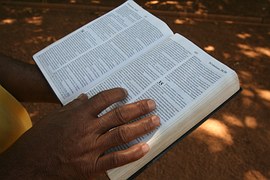
For an overview, simply look at your hand for 5 ways to get a grip on your Bible:

HEAR the Word (little finger). Romans 10:17
READ the Word (ring finger). Revelation 1:3
STUDY the Word (middle finger). Acts 17:11
MEMORIZE the Word (index finger). Psalm 119:9-11
MEDITATE on the Word (thumb). Psalm 1:2-3

If this is a new teaching for you (or perhaps something you’ve heard before but should review), please take time today to do the following:

  • Download the PDF so you can and print it out and read it.
  • Read the five passages.
  • Watch the YouTube video.

Then take a spiritual inventory of yourself: how are you doing in each area? Where do you see consistency and evidence of growth? And where is there need for change?

Next, pray about this, thanking God for what He’s already done for you through these methods, and asking Him to provide the desire and self-discipline to make any changes for greater faithfulness in each area.

My biggest weakness has been MEMORIZING the Word, so I’ve been focusing on that lately. The Navigators offer a free resource to memorize one Bible verse each month – it’s called “The 7-Day Scripture Memory Challenge.” I’ve been doing this since April.

You can sign up for the July challenge using this link (by July 8): navgift.org/together

The July challenge starts on July 10th. For seven days, you will receive one text each day with a unique tip to help you memorize Romans 12:2.  Let’s do this together! You’ll also receive a free scripture memory printable at the end for participating in the challenge.

As Jesus prayed, may God sanctify you through the truth, for His Word is truth (John 17:17).

Posted in Bible memorization, Bible reading, Bible study, Free Books & Other Resources | Tagged , | Leave a comment

5 Precious Promises from God


The Bible is filled with God’s promises — hundreds of them.

They are right there in His Word – plain as day – for us to receive and find comfort in.

Oh, that I would spend time every day meditating on these promises and the God who is their source.

I love the way Peter describes God’s promises:

“He has granted to us his precious and very great promises.”
2 Peter 1:4

Here we learn three wonderful truths about the promises of God:

God’s promises are a gift.
He has granted them to us. They are demonstrations of His grace. We don’t deserve them or earn them. He simply offers them freely because He is gracious and merciful, compassionate and kind. The promises of God are the outpouring of the love of God to needy sinners like you and me.

God’s promises are precious.
What are God’s promises worth? Go ahead – try to put a price tag on them. They are of infinite value because they come from the God of inestimable worth. Like the rest of His Word, the promises of God are “more precious than gold, than much pure gold” (Psalm 19:10).

God’s promises are very great.
How great is God? “His greatness no one can fathom” (Psalm 145:3). Likewise, the greatness of God’s promises is beyond compare – they are off the charts. We run out of words when describing their wonder and glory.

What Scriptures come to mind when you think of God’s promises?

Here’s one of my favorite Bible verses – and it is packed with the promises of God.

“Do not fear, for I am with you;
Do not anxiously look about you, for I am your God.
I will strengthen you,
Surely I will help you,
Surely I will uphold you with My righteous right hand.”
Isaiah 41:10

God makes five promises in this verse that can fortify our faith in any situation. These promises are the sure cure for the fears and anxieties of life:

“I am with you” – the promise of His presence
“I am your God” – the promise of His commitment
I will strengthen you” – the promise of His power
“I will help you” – the promise of His provision
“I will uphold you” – the promise of His support

Which of these promises do you find especially meaningful today?

Let me know by leaving a comment below.

Lastly, it’s important to note that there are two commands in this verse:
“Do not fear”
“Do not anxiously look about you”

What is the relationship between the two commands and the five promises?

I’d love to hear your thoughts on that, too.

Posted in Thoughts About God | Tagged , | Leave a comment

What’s In Your Heart?

According to Jesus, the most important commandment is to “Love the Lord your God with all your heart and with all your soul and with all your mind and with all your strength” (Mark 12:30).

How do we do that?

We start by understanding the biblical meaning of the word “heart.”


Today it is common to describe the human heart as primarily the “seat of emotions,” i.e. our feelings. Yet Hebrews 4:12 refers to “the thoughts and intentions of the heart.” Hmm. Why is that?

By consulting Hebrew and Greek dictionaries, along with the findings of those who have devoted decades to studying the meanings of the words found in Scripture, here’s what I’ve discovered.

There are several words used in the Bible to describe the immaterial, invisible, and transcendent nature of mankind: heart, soul, spirit, and mind are four of the most frequently used terms, along with other words like intentions, attitudes, desires, affections, purposes, will, etc.

Here’s a good summary statement about these words from Dr. Robert A. Morey, (M.Div and D.Min, Westminster Theological Seminary), author of Death and the Afterlife.

“All the terms (i.e. heart, soul, spirit, and mind) are used interchangeably and are all synonyms which refer to man’s invisible side.” (Morey, p. 54).

For example, “At no point does the Old Testament speak of man’s “soul” and “spirit” as being separate metaphysical entities.” (Morey p. 54).

More from Morey: in the OT, “The word “heart” (lev) was metaphorically used to describe that part of man which transcended mere physical life. Brown, Driver, and Briggs pointed out (p. 523) that lev refers to “the inner man, mind, will, heart . . . the inner man in contrast to the outer (Ps. 73:26) . . . , i.e. the soul, comprehending mind, affections, and will.”

Morey (p. 62) comes to a similar conclusion regarding the NT word for heart (kardia):

“The NT speaks of man’s transcendent self as his “heart” 162 times. Arndt and Gingrich (p. 404) point out that kardia is the word frequently used in the Septuagint for the center of man’s emotion, intellect, and will. Thayer (p. 325) defines it as “the soul or mind, as it is the fountain and seat of the thoughts, passions, desires, appetite, purposes, endeavors, etc.”

“The kardia of man is that part of him which feels, thinks, and decides (Mark 9:24; Luke 24:25; John 14:1). It is used with psuche as the center of worship (Mark 12:30; John 4:24). It cannot be reduced to the mere principle of physical life which animates the body of animals as well as man. It everywhere refers to the supernatural or invisible part of man which is his transcendent ego or self.”

Here’s another reputable source: Vine’s Complete Expository Dictionary of Old and New Testament Words.  Vine defines the OT word for “heart” as . . .

“The inner man, contrasted to the outer man” (see Deut 30:14; Joel 2:13; 1 Sam 16:7)
“The seat of desire, inclination, or will” (Ex 7:14; Ex 35:5, 21, 29; Ps 86:12)
“The seat of emotions” (Ex 4:14; Judges 16:25; Is 35:4; 1 Sam 2:1, 4:13)
“The seat of knowledge and wisdom and as a synonym of the mind” (Deut 8:5; 1 Kings 3:29; Job 22:22)
“The seat of conscience and moral character” (Job 27:6; 2 Sam 4:10; Is 38:3; Ps 24:4)
“The seat of rebellion and pride” (Gen 8:21; Ez 28:2; Jer 17:1)

To summarize Vine on the OT use of “heart” – “The heart stands for the inner being of man, the man himself. As such, it is the fountain of all he does (Prov 4:4). All his thoughts, desires, words, and actions flow from deep within him. Yet a man cannot understand his own heart (Jer 17:9). As a man goes on in his own way, his heart becomes harder and harder and harder. But God will circumcise (cut away the uncleanness of) the heart of His people so that they will love and obey Him with their whole being (Deut 30:6).”

Vine defines the NT word for “heart” as “man’s entire mental and moral activity, both the rational and the emotional elements. In other words, the heart is used figuratively for the hidden springs of the personal life.”

He then quotes Hastings’ Bible Dictionary:

“The Bible describes human depravity as in the heart because sin is a principle which has its seat in the center of man’s inward life, and then defiles the whole circuit of his action (Matt 15:19-20). On the other hand, Scripture regards the heart as the sphere of Divine influence (Rom 2:15, Act 15:9). The heart, lying deep within, contains ‘the hidden man’ (1 Peter 3:4), the real man. It represents the true character but conceals it.”

Vine then catalogs the various uses of “heart” with accompanying NT verses. The heart denotes:

  • the seat of grief (John 14:1; Romans 9:2; 2 Corinthians 2:4)
  • the seat of joy (John 16:22; Ephesians 5:19)
  • the desires (Matthew 5:28; 2 Peter 2:14)
  • the affections (Luke 24:32; Acts 21:13)
  • the perceptions (John 12:40; Ephesians 4:18)
  • the thoughts (Matthew 9:4; Hebrews 4:12)
  • the understanding (Matthew 13:15; Romans 1:21)
  • the reasoning powers (Mark 2:6,8; Luke 24:38)
  • the imagination (Luke 1:51)
  • the intentions (Hebrews 4:12)
  • purpose (Acts 11:23; 2 Corinthians 9:7)
  • the will (Romans 6:17; Colossians 3:15)
  • the seat of faith (Mark 11:23; Romans 10:10; Hebrews 3:12)

To love God with our heart means much more than loving Him with our emotions. It means loving Him with all our being. That’s what the heart is. Jesus wasn’t identifying three different parts of our inner person (heart, soul, mind); rather He used three synonymous words for emphasis.

May God give us grace to love Him completely. He’s worthy of our total devotion.

NOTE: This post is an excerpt from the book,
What the Bible Does (Part 1): How the Bible Solves Your Biggest Problem,
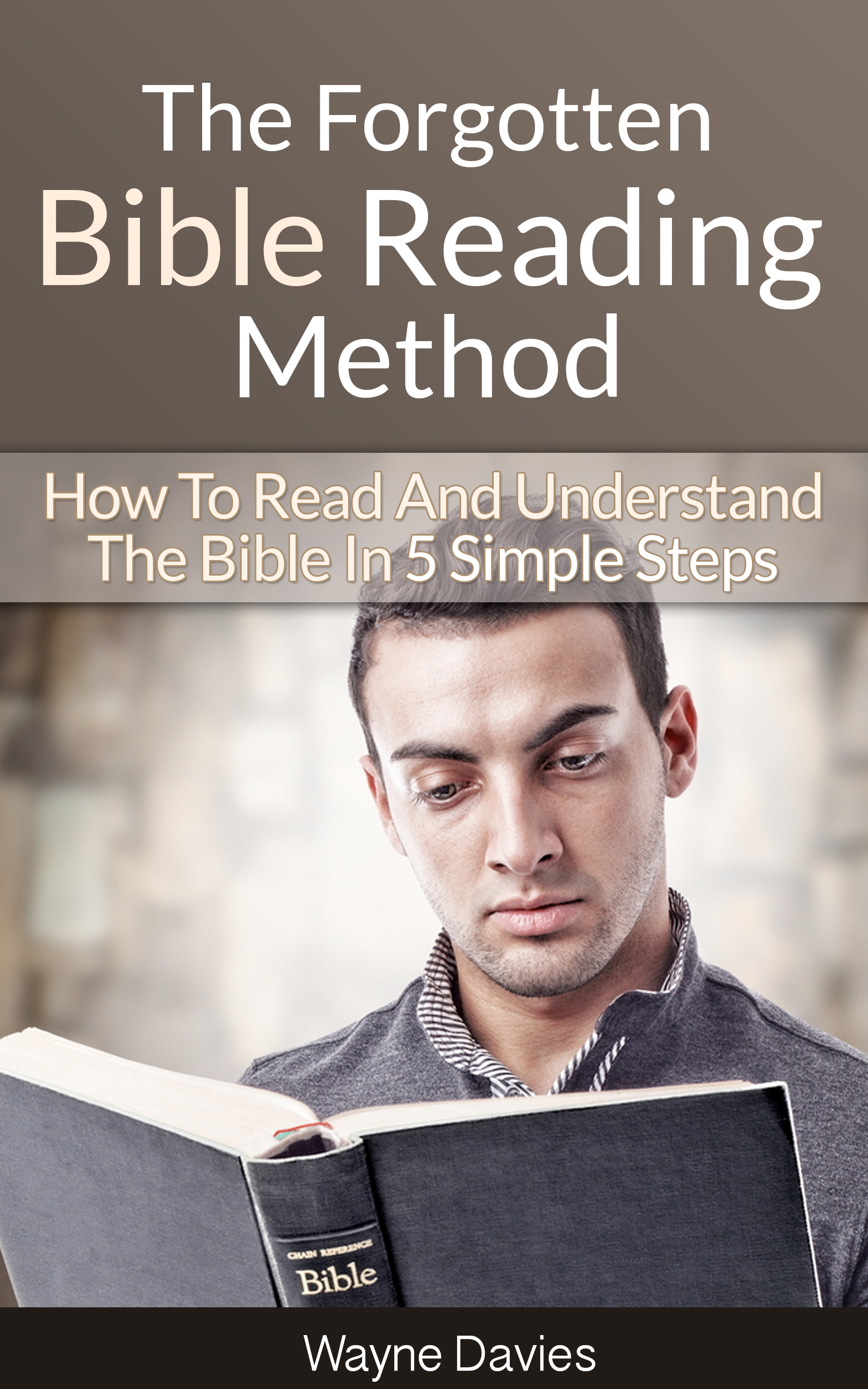
by Wayne Davies. Available on Amazon in Kindle and paperback formats.
The Kindle version is free.

Posted in Greatest Commandment | Tagged , | Leave a comment

A Father’s Day Message 2025

To all the dads out there, Happy Father’s Day!

Have a great day with your family!

I want to offer you some timely advice that can provide the direction you need to teach your children and grandchildren well and lead them on the path of Christ-exalting discipleship.


Have you ever wondered, “What are the most important things I can teach my children?” The Bible is a big book. When it comes to passing on God’s truth to the next generation, where do I start?

I have listened to two sermons by John MacArthur that answer those questions quite well. These teaching sessions are part of a series entitled “Creating Shade for Your Children.” MacArthur takes you through the book of Proverbs and summarizes ten critical truths that we need to share with our kids.

Here are the 10 biblical principles our children need to learn from us:

1. Fear your God
2. Guard your mind
3. Obey your parents
4. Select your companions
5. Control your desires
6. Enjoy your spouse
7. Watch your words
8. Pursue your work
9. Manage your money
10. Love your neighbor

Did you notice something obvious here? These 10 truths aren’t just for kids, are they? This is what anyone of any age needs to focus on. Amen?

Certainly, if we are going to immerse our children in these teachings, we must have a thorough understanding of them ourselves.

So I urge you to take time to read or listen to this material. It could change the lives of both you and your children.

Creating Shade for Your Children, by John MacArthur. These sermons are available for free in print, audio, and video formats here –

www.gty.org/resources/sermons/90-481/creating-shade-for-your-children-part-3

www.gty.org/resources/sermons/90-482/creating-shade-for-your-children-part-4

Posted in Free Books & Other Resources, Parenting | Tagged , | Leave a comment

31 Reasons to NOT Follow Your Heart

“Follow your heart.”

Ever heard that? I have.

Jon Bloom of DesiringGod.org has written a book entitled Don’t Follow Your Heart that explains why this is bad advice. Really bad.

“Follow your heart” is a creed embraced by countless people. It’s a statement of faith in one of the great pop-cultural myths of our day — a gospel proclaimed in many of our stories, movies, and songs. It can sound so simple, beautiful, and liberating. It’s tempting to believe.

Until you consider that your heart has sociopathic tendencies. Our hearts were never designed to be followed, but to be led. Our hearts were never meant to be gods in whom we believe, but to believe in God.

This book contains 31 meditations for recalibrating your heart. It is a collection of helps for common heart problems. Because your biggest problems in life are heart problems.

“Above all else, guard your heart, for everything you do flows from it.”
Proverbs 4:23

“The heart is deceitful above all things and beyond cure. Who can understand it?”
Jeremiah 17:9

“Your heart will not save you. You need to be saved from your heart.”
— Jon Bloom, author, Don’t Follow Your Heart

This book is available for free in PDF, Mobi, and ePub formats here:
http://www.desiringgod.org/books/don-t-follow-your-heart

Enjoy!

Posted in Free Books & Other Resources | Tagged , , , | Leave a comment

The Most Hated Christian Belief

When Jesus was here on earth, relatively few people loved Him.

In fact, many hated Him.

So many people hated Jesus that He made this statement on the night He was betrayed by Judas:

“If the world hates you, know that it has hated me before it hated you.”
John 15:18

The world hated Jesus. That’s quite an indictment!

It begs the question, “Why?”

The most loving person to ever live on earth was hated so much that He was nailed to a cross as a criminal.

But why?

Jesus answered that question when he said that the world “hates me because I testify about it that its works are evil.” (John 7:7)

Jesus loved people so much that He told them the truth about their depraved condition. He was honest with people about their sins; He didn’t gloss over or ignore them. He didn’t sweep our transgressions under the carpet. He called sin a sin. He even called people “evil” when complimenting them.

“If you then, who are evil, know how to give good gifts to your children . . .”
(Matthew 7:11).

And when people are confronted with their sin, they don’t like it.

We prefer to think we’re doing OK, even though God tells us just the opposite in the Bible, dozens of times.

Why else would Paul write this to the Roman believers:
“For by the grace given to me I say to everyone among you not to think of himself more highly than he ought to think, but to think with sober judgment.”
Romans 12:3

We are wired to say, “I’m OK, and you’re OK.” That sounds a lot better than “I’m bad to the bone, and so are you.”

Solomon got it right: “Most men will proclaim every one his own goodness: but a faithful man who can find?” (Proverbs 20:6 KJV)

Jesus sets the example here. He told Nicodemus that “the light has come into the world, and people loved the darkness rather than the light because their deeds were evil” (John 3:19) – and this man was a highly respected religious leader; even Jesus called him “the teacher of Israel” (John 3:10).

If we are going to tell people the truth of the gospel, we must “be like Jesus” and tell them the bad news of the gospel first — namely, that “all have sinned and fall short of the glory of God” (Romans 3:23).

And when we do that, we, like Jesus, can expect to be hated. The world hated Jesus because He told them about their sin. We should expect the world to hate us for the same reason.

We can also expect some people to understand the truth of their corruption. But they will likely be few and far between, for most self-righteous sinners prefer to cling to their self-righteousness — all the way to Judgment Day.

But because Jesus is building His church, when the good news of the gospel is preached with an appropriate explanation of the bad news of sin and its devastating consequences, the Spirit of Christ can then convict the world “concerning sin and righteousness and judgment” (per John 16:8). Only then can sinners repent of their sin, trust Christ for the salvation only He can provide, and receive forgiveness of their iniquities.

Then, when one sinner repents, we get to rejoice with the angels in heaven, per Luke 15:7.

May God empower us to be faithful in sharing the gospel with every person. For free resources on how to do that, check out THIS BLOG POST.

And may we “Consider him who endured from sinners such hostility against himself, so that you may not grow weary or fainthearted” (Hebrews 12:3).

Posted in Evangelism | Leave a comment

The Woman Who Taught Me How to Study the Bible

This post is a tribute to Kay Arthur, co-founder of Precept Ministries.

She died last week at the age of 91.

This is a woman used powerfully by God to teach God’s Word for decades to millions.

As Melissa Kruger writes . . .


“The extent of her influence is difficult to quantify. She wrote more than 100 books and Bible studies, with more than 10 million in print. She has inductive studies on all 66 books of the Bible, and her Bible studies are taught in 90 languages in 190 countries. For more than 20 years, her radio and TV program Precepts for Life reached more than 75 million households every day in more than 30 countries. It’s overwhelming to consider the number of people who learned how to study their Bibles inductively because of her years of faithful teaching and writing.”
https://www.thegospelcoalition.org/article/kay-arthur-taught-study-bible/

Because of Kay Arthur, I am one of those people “who learned how to study their Bibles inductively.”

And so I am thanking God today for this woman and the way God enabled her to help so many people dig deep into the priceless treasures of Scripture.

Here are a few of the Precept Ministry resources that I have not just read, but joyfully devoured, over the past 20 years:

How to Study Your Bible
https://www.amazon.com/dp/B00GXED9XM/
I have a stack of books about “how to” study God’s Word. But this is the only one I’ve read at least three times. It’s the one that got me started in inductive Bible study. By far, it’s my favorite book on the topic.

That I May Know Him (Philippians / Colossians)
https://www.amazon.com/That-May-Know-Him-Philippians/dp/0736908099/
Precept Ministries offers several “levels” of Bible study guides. This book is part of “The New Inductive Study Series” and is a wonderful study, even though it’s not as in-depth as the other levels. It takes you through Philippians in 5 weeks and Colossians in 8 weeks. For a free PDF download of Week 1 in the Philippians study, CLICK HERE.

Mark: The Gospel of Jesus Christ, Son of God and Son of Man
https://shop.precept.org/collections/mark/products/mark-bible-studies
This book is part of the “Precept Upon Precept” series, the most in-depth study (level 5) offered by Precept Ministries. You’ll spend about 5 hours each week on a lesson. For a free PDF download of Lesson 1, CLICK HERE.

Lastly, here’s an article Kay Arthur wrote at age 88 when she was “learning to live with Parkinson’s disease.” Read this article to discover how she answered the question, “How am I to handle this difficult diagnosis?” You’ll also learn about the struggles she faced as a 29-year-old, divorced mother of two young boys, and what God did for her to find joy in Him and His Word.
https://thecove.org/blog/kay-arthur-learning-to-love-the-bible/

Should you utilize any of Kay Arthur’s Bible study guides and books, I pray you’ll benefit as much as I have.

Posted in Bible study, Book Reviews, Famous Christians, Free Books & Other Resources | Tagged , , | 1 Comment

The Promises of Prayer

The Bible is filled with God’s promises. And there are many promises in Scripture related to prayer.

Precept Ministries has released a new book entitled The Promises of Prayer:
(A Collection on Prayer, Volume Two).


They are offering a free download of the first two lessons (see below for details).

I highly recommend anything published by Precept Ministries. I’ve used their Bible studies over the years and have benefited greatly from them. They teach the “inductive Bible study” method, which I also give two thumbs up. It’s my favorite way to study the Bible.

If you’re new to inductive Bible study, this would be a great way to learn about it.

This is also a wonderful opportunity to dive deeper into one of Scripture’s major themes: God’s faithfulness to fulfill His promises through prayer.

From the Table of Contents, here are the 20 lessons included:

Lesson 1: Introduction
Lesson 2: Our Promise-Keeping God  – 2 Chronicles 6
Lesson 3: I Have Heard Your Prayer – 2 Chronicles 7
Lesson 4: Our Part to Play – 2 Chronicles 7
Lesson 5: Prayer at a Glance – 2 Chronicles 6–7
Lesson 6: Ask, Seek, Knock – Matthew 7
Lesson 7: Our Giving God – Matthew 7
Lesson 8: Confidence in Prayer – 1 John 5
Lesson 9: According to His Will – 1 John 5
Lesson 10 Prayer at a Glance – Matthew 7; 1 John 5
Lesson 11: Ask in My Name – John 14
Lesson 12: The Promised Holy Spirit – John 14
Lesson 13: Life in the Spirit – Romans 8
Lesson 14: The Spirit Intercedes – Romans 8
Lesson 15: Prayer at a Glance – John 14; Romans 8
Lesson 16: I Will Send Him to You – John 16
Lesson 17: Fullness of Joy – John 16
Lesson 18: The Father Loves You – John 16
Lesson 19: Peace in Jesus – John 16
Lesson 20: Prayer at a Glance – John 16

Lessons 1 and 2 of this 20-lesson study are available as a free PDF download:
CLICK HERE to get your copy.

Enjoy!

Posted in Free Books & Other Resources, Prayer | Tagged | Leave a comment

The Prayer of a Godly Mother

What does a godly mother look like?

She’s a woman of prayer and a woman who knows God.

Hannah is such a mother.

She is one of my favorite people in the Bible. You can read about her in 1 Samuel 1-2. She wanted a child so much but was barren and therefore distraught. She cried out to God to give her a son, and when He answered her prayer, Hannah kept her promise to “give him to the LORD all the days of his life” (1 Samuel 1:11).

So Hannah brought her young son Samuel to the tabernacle at Shiloh, “so that he may appear in the presence of the LORD and dwell there forever” (1 Samuel 1:23). Then we get to read this prayer of a godly mother – please take time to read it now and learn how to pray a God-focused prayer of praise.

“My heart exults in the Lord;
my horn is exalted in the Lord.
My mouth derides my enemies,
because I rejoice in your salvation.

“There is none holy like the Lord:
for there is none besides you;
there is no rock like our God.
Talk no more so very proudly,
let not arrogance come from your mouth;
for the Lord is a God of knowledge,
and by him actions are weighed.
The bows of the mighty are broken,
but the feeble bind on strength.
Those who were full have hired themselves out for bread,
but those who were hungry have ceased to hunger.
The barren has borne seven,
but she who has many children is forlorn.
The Lord kills and brings to life;
he brings down to Sheol and raises up.
The Lord makes poor and makes rich;
he brings low and he exalts.
He raises up the poor from the dust;
he lifts the needy from the ash heap
to make them sit with princes
and inherit a seat of honor.
For the pillars of the earth are the Lord’s,
and on them he has set the world.

“He will guard the feet of his faithful ones,
but the wicked shall be cut off in darkness,
for not by might shall a man prevail.
10 The adversaries of the Lord shall be broken to pieces;
against them he will thunder in heaven.
The Lord will judge the ends of the earth;
he will give strength to his king
and exalt the horn of his anointed.”
(1 Samuel 2:1-10)

This is one of my favorite prayers in the Bible. It is filled with much truth about God, for both His attributes and His actions are on display: from His holiness, knowledge, and sovereignty to His salvation, provision, protection, and judgment. Indeed, this prayer reveals the heart of a woman who knew her God well.

May Hannah’s prayer teach us much about God, and may we strive to know Him and exult in Him all the days of our lives.

And for a deeper dive into the life of Hannah in 1 Samuel 1-2, you can read and/or listen to this teaching:

How to Be a Godly Mother, a sermon by John MacArthur, is available for free in audio (MP3) and PDF formats here:
https://www.gty.org/library/sermons-library/1279/how-to-be-a-godly-mother

Posted in Motherhood, Parenting, Prayer | Tagged , , | Leave a comment

How to Overcome the Fear of Death (The Hope-Filled Promise of Hebrews 2:14-15)

What is your greatest fear?

  • Heights?
  • Public speaking?
  • An IRS audit?


One survey of middle-class people produced these answers: spiders (29%), flying (21%), small spaces (19%), dentists (14%), needles (10%) and blood (4%).

Another survey – of grade school children in a major U.S. city – produced this response: the #1 fear was getting shot.

How about you? What is your greatest fear? Are you more like the first group of people, or the second?

The fear of death, while not mentioned at all in the first survey, may be the fear that we are most afraid to even think about or talk about. Its absence above is evidence of that, is it not?

To complicate things, fear of death has multiple components. There is the fear of the manner of death (will it take years or a split second?), and then there’s the fear of what happens to us immediately after death. Where do we go? What will the next life be like? These questions have been plaguing humanity for centuries.

The Bible has much to say about death and our fear of death. And it certainly has much to say about life after death.

If you are filled with anxiety about death and its uncertain consequences, I hope you’ll find much comfort in what I’m about to say: the Bible provides an antidote to the fear of death, and that cure is found in the Lord Jesus Christ, the One who said, “I am the resurrection and I am the life. He who believes in me will live, even though he dies. And whoever lives and believes in me will never die” (John 11:28-29).

Isn’t this an incredible, breathtaking promise? For the person who believes in Jesus, we will experience physical death (“he dies”), but we have the certainty of living with Jesus forever (“will never die”). For the Christian, death is the end of physical life on earth and the beginning of everlasting life in heaven.

For the believer in Jesus, physical death is therefore not to be feared, because it opens the doorway to eternal bliss in the presence of King Jesus.

I love the way the writer of Hebrews explains it: “Since the children have flesh and blood, he (Jesus) shared in their humanity so that by his death he might destroy him who holds the power of death – that is, the devil – and free those who all their lives were held in slavery by their fear of death” (Hebrews 2:14-15).

Apart from the grace of God, the fear of death is normal. If you fear death, you are experiencing one of the most common human emotions. But you may be so afraid to die that you are living in slavery to that fear.

Does the above passage describe you?  Are you a slave to your fear of death?

If so, these verses are you for you! They are filled with hope because they point you to the One who can set you free from that fear. Jesus Christ, by his death on the cross, has the power to abolish your slavery to the fear of death.

Please note the key phrase in Hebrews 2:14-15 – Jesus can both destroy the devil and free you from slavery by his death. When Jesus died on the cross, he died for a very specific reason – to absorb God’s wrath against your sin and thereby pay the penalty for your sin that you deserve to pay.

We have all broken God’s law. Take a look at Exodus 20:1-17 and read through the 10 Commandments to remind yourself of the many ways you’ve sinned against a holy God.  Keep in mind that Jesus said anger can be just as much a sin as murder and therefore deserving of the same judgment in hell (Matthew 5:21-22). Likewise, mental adultery (lust) is just as much a sin as physical adultery (Matthew 5:27-30) and also worthy of the same punishment in hell.

Perhaps you’ve heard this before – “Christ died for our sins” (1 Corinthians 15:3). Please consider the incredible, life-changing, hope-filled meaning of these five words. It is the key to unlocking the door to peace with God, for once you have repented (turned away from your sin) and trusted Jesus as the only One who can save you from the penalty of sin, your anxiety over death will be removed and the promise of Jesus that you “will never die” becomes yours forever.

One final comment:

Jesus said “Whoever lives and believes in me will never die” (John 11:29). What does that mean? For a deeper dive into the meaning of this incredible promise, download a free copy of this book by clicking on the link below:

A Self-Portrait of Christ:
A Seven Week Bible Study on The I AM Statements of Jesus
by Wayne Davies and Heather Erdmann
https://payhip.com/b/gS6Il


Posted in Jesus Christ | Tagged , | Leave a comment